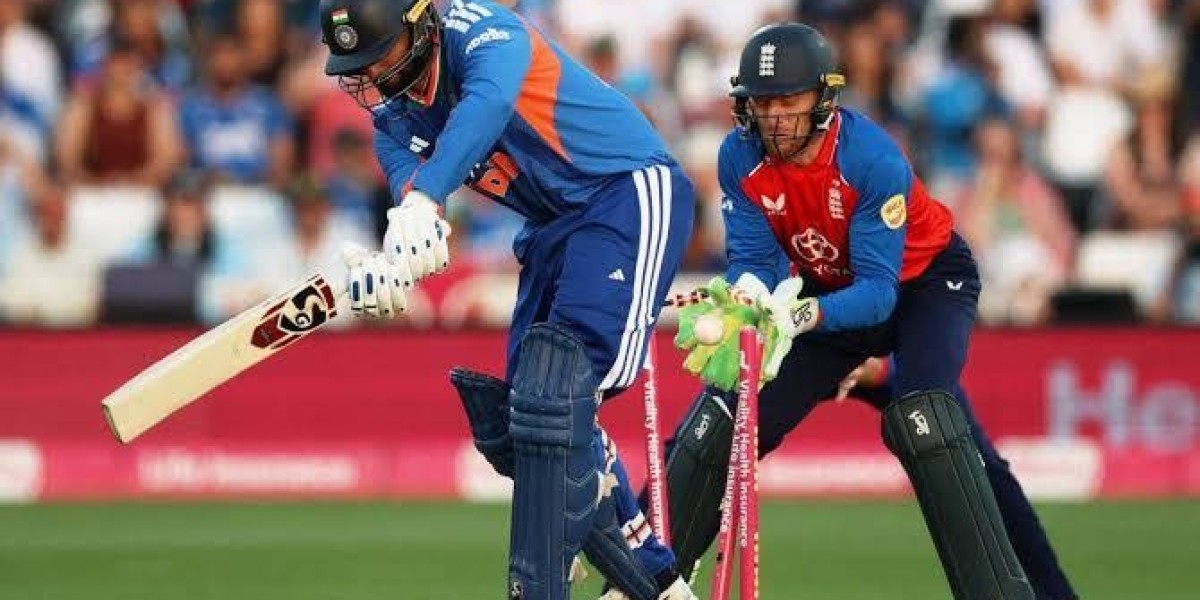

Cricket has evolved more in the past twenty years than it did in the past hundred. A cricket fan from the nineties would recognise the bat, the ball and the pitch, but very little else: matches that are over in three hours, year-round leagues, reviews that save the umpire's blushes, and cricketers who train like athletes. It's quicker, louder and there's more cricket played in more places than you could ever imagine. Just look at skyexchange for a taste.
A simple explanation to get you up to speed with the latest in cricket. A simple guide to modern cricket: What is modern cricket? What are the three formats of modern cricket? How franchise leagues changed the calendar. What technology has changed the game? How data and fitness define the modern player. How has women's cricket grown? A quick look at skyexchange during a game will reveal all of these concepts in action.
What Is Modern Cricket?
Modern cricket is just cricket these days. What we do now. The rules of the game have remained more or less the same for 100 years – there are 11 members in each team, the cricket pitch is 22 yards long, an over is six balls, and a team has 10 wickets to get before they are out. But everything else has changed.
There are three things that make up the modern game. Firstly, the cricket game is played in three formats, not one. Secondly, the game is played throughout the year now, in cricket leagues across the world. And thirdly, there is technology and data embedded into every game. Check skyexchange during a match, and you will see all three.
The Three Formats that Make up the Modern Game
Cricket nowadays consists of three formats: test cricket, one-day cricket and T20 cricket. The 'test' game is the 2oth-century classic: five days, two innings each, unlimited overs; the 'one-day' version fits in the middle – 50 overs per team, around 8 hours; the 'Twenty20', the newest and most recent: 20 overs per team, three hours.
There are skills for each format, there are stars for each format, and there are fans for each format. Some players will play all three formats. Some will play only one. A glance at skyexchange during the game looks quite similar to all three formats with different rate of run rate along with the different scorecard.
How the Formats Work Together
The formats complement each other, not compete with each other. Test cricket is about patience and technique, one-day cricket is about something about patience and technique balanced, and T20 cricket is about a test of speed and power. One format usually teaches something to a player that helps in another one.
Franchise Leagues and the New Cricket Calendar
The biggest change in modern cricket is franchise leagues. The original franchise league was the Indian Premier League (IPL), which started in 2008: city franchises buying and selling players, a tightly scheduled, fast-paced season that was embraced by millions of fans. More leagues soon sprung up- leagues in Australia, England, Pakistan, South Africa, and the Caribbean - and now cricket is a year-round sport.
Leagues came in the following two ways. Firstly, the players are now paid more, and you play and compete with people from all around the world. Secondly, the schedule is packed: there is a game almost always happening in some league in the world. Look at skyexchange during the game; it is the same, packed schedule of Test series, one-dayers, T20 series and leagues.
Technology That Changed the Game
Technology has altered the game of cricket. The most significant impact has been the Decision Review System, or DRS. A team can challenge a third umpire's decision by taking advantage of ball tracking, Ultra Edge and Hot Spot. In Tests, a team is allowed three unsuccessful challenges in every innings. This is reduced to two in one-day internationals and T20s.
Technology also brought a new way of viewing: each ball is logged, every shot scored, and everyone has stats to follow. You look at skyexchange during a game, and you find the same stats: run rate, number of wickets, and form of each player - displayed on the same screen.
DRS and Ball Tracking
Ball tracking involves using high-speed cameras to track the path of the ball and estimate where it would have gone. Ultra Edge uses stump microphones to detect the slightest contact of bat on ball. These two systems combined help to improve decision-making.
Fitness, Data and the Contemporary Player
The player of today is an athlete. Now, teams assess fitness even before selecting players and, in India, the contracted men's players are said to be averaging a Yo-Yo test score of 17.1. Players hit the gym, go for runs to build endurance, and work on their speed, strength, and recovery, since cricket is played at a quicker pace and has a packed calendar.
The numbers are a part of the game as well. Teams analyze matchups: which bowler gives a batter a hard time, which batter is best when facing a spin attack, and the field placements. Glance at skyexchange during a game and you're seeing the same thing: the data behind every player and what it reveals.
The Rise of Women's Cricket
Today's game has developed rapidly in the modern era. Women's cricket now has its own World Cups, its own leagues, its own stars and crowds are continually expanding. The women's game now uses the same formats as the men: Test, one-day, and T20 cricket, with the same rules and the same skill.
The growth is good for the game. Cricket is being played by more players, viewed by more supporters, and played in more games. The modern game is not two different games; it's one game with two different sets of competitors, and that's better for all of us.
Women's cricket has its own World Cups, leagues, and superstars.
The women's game is also played in these same formats: Test, one-day, and T20.
Crowds and coverage are growing every year.
Guide To Follow Modern-Day Cricket As A Fan
Watching today's cricket is straightforward if you know where to focus. Firstly, understand the format: test, one-day or T20? Secondly, get the tournament: is it a series between countries, a World Cup, or a franchise competition? Thirdly, monitor the score: the runs, the wickets, and the rate of runs scored per over.
Learn the game better by watching and asking. Take one format at a time, get to know the rhythm, then move onto another. Don't get hung up on all the details at first; just watch the ball, watch the scoreboard, and see how players respond, and the modern game will soon come more naturally.
Find out the format first- Test, one-day, or T20.
Don't confuse the tournament: it is a series, a World Cup or a league.
Follow the score: runs, wickets, run rate.
Frequently Asked Questions
Q1. What makes cricket modern?
Today, cricket has three formats, franchise leagues that stretch across the calendar, new technologies such as DRS and ball tracking, and athletes who now train like athletes. The rules are largely the same, but the speed, the cash, and the data is fresh.
Q2. Which cricket format is the most popular?
T20 is currently the most popular form of cricket because it is quick, fast, and simple to watch. The IPL is the top T20 league in the world, and the T20 World Cup is the top T20 tournament in the world.
Q3. How do franchise cricket leagues work?
A franchise league is a short tournament where city-based teams buy players at an auction. They then face off over a few weeks, with the top teams reaching the play-offs and then the final. The Indian Premier League (2008-) was the first big one.
Q4. Does Test cricket still matter in the modern game?
Yes. Test cricket remains the format that pushes a player the furthest, and the World Test Championship provides a summit and a trophy. Many players believe that Test cricket is the most difficult format – the one they most want to conquer.
Conclusion
Modern cricket remains the same game it always was; it just involves a different way of playing it. The laws of the game haven't changed much, but modern cricket is quicker, more boisterous, and is played throughout the year. There are now three formats of the game – Test, one-day and T20 cricket, while franchise leagues are now scheduled around the world. Technology and data-driven analysis have enhanced the umpire's decision-making process and the fan experience. The modern-day player is changing rapidly. Women's cricket has become a dominant feature of the sport.
Watch it. One format, one team, one look at the score, and the game of modern-day cricket will be familiar in no time, and you will understand why one sport has so many fans the world over, all year long. A skyexchange Login: You can watch every single format, every live score, and one big game from the comfort of your own home with a skyexchange registration