
Choosing the right school is one of the most meaningful decisions parents make for their children's future. A school is not simply a place where students attend classes and complete examinations. It is an environment where they develop knowledge, discover their interests, build friendships, and learn values that shape their personalities.
With several educational institutions available across Varanasi, parents often find it challenging to identify a school that meets their expectations. Academic performance, teaching quality, infrastructure, extracurricular activities, and student well-being are all important factors to consider.
For families searching for the Best School in Varanasi, understanding what makes an educational institution genuinely suitable can make the selection process easier.
Here are some essential factors parents should consider before choosing a school.
1. Look for a Strong Academic Foundation
Academic quality is one of the first things parents evaluate when comparing schools. A good educational institution should provide a structured curriculum that encourages conceptual understanding, independent thinking, and consistent academic progress.
Students should be encouraged to understand subjects rather than simply memorise information.
When exploring different schools, parents should consider:
The curriculum and educational board.
Teaching experience and teacher qualifications.
Classroom learning methods.
Regular assessments and academic feedback.
Availability of additional academic support.
Opportunities for practical and project-based learning.
A strong academic foundation helps students become confident learners and prepares them for future educational opportunities.
2. Understand the Benefits of CBSE Education
The Central Board of Secondary Education (CBSE) is a widely recognised educational board in India. Its curriculum provides a structured learning framework and supports students through different stages of school education.
Parents considering a CBSE School in Varanasi should understand how the school implements the curriculum in everyday classroom activities.
Important factors include:
Concept-Based Learning
Students should be encouraged to understand fundamental concepts and apply their knowledge to different situations.
Practical Education
Experiments, projects, presentations, and classroom demonstrations can make learning more meaningful.
Structured Assessment
Regular assessments help teachers understand students' progress and identify areas that may require additional attention.
Academic Continuity
The CBSE framework offers a consistent academic structure that can be helpful for families who may relocate between different Indian cities.
Parents should remember that the quality of teaching and implementation matters as much as the educational board itself.
3. Evaluate the Teaching Methods and Faculty
Teachers play an important role in shaping the learning experience of every student.
An effective teacher does more than explain lessons. They encourage curiosity, answer questions, recognise individual abilities, and help students develop confidence.
When visiting a school, parents should try to understand:
Whether teachers encourage classroom participation.
How difficult concepts are explained.
Whether students receive constructive feedback.
How individual learning difficulties are addressed.
Whether teachers communicate regularly with parents.
A supportive teacher-student relationship creates an environment where children feel comfortable expressing themselves and exploring new ideas.
4. Give Importance to Modern Infrastructure and Facilities
A school's infrastructure can influence how students learn and participate in different activities.
Parents searching for the Best CBSE School in Varanasi should examine whether the campus provides facilities that support academic and extracurricular development.
Some important facilities to evaluate include:
Smart classrooms: Appropriate educational technology can support interactive lessons and visual learning.
Science laboratories: Practical experiments help students understand scientific concepts.
Computer facilities: Technology education introduces students to digital tools and essential computer skills.
Library: Books and reading resources encourage independent learning and improve language skills.
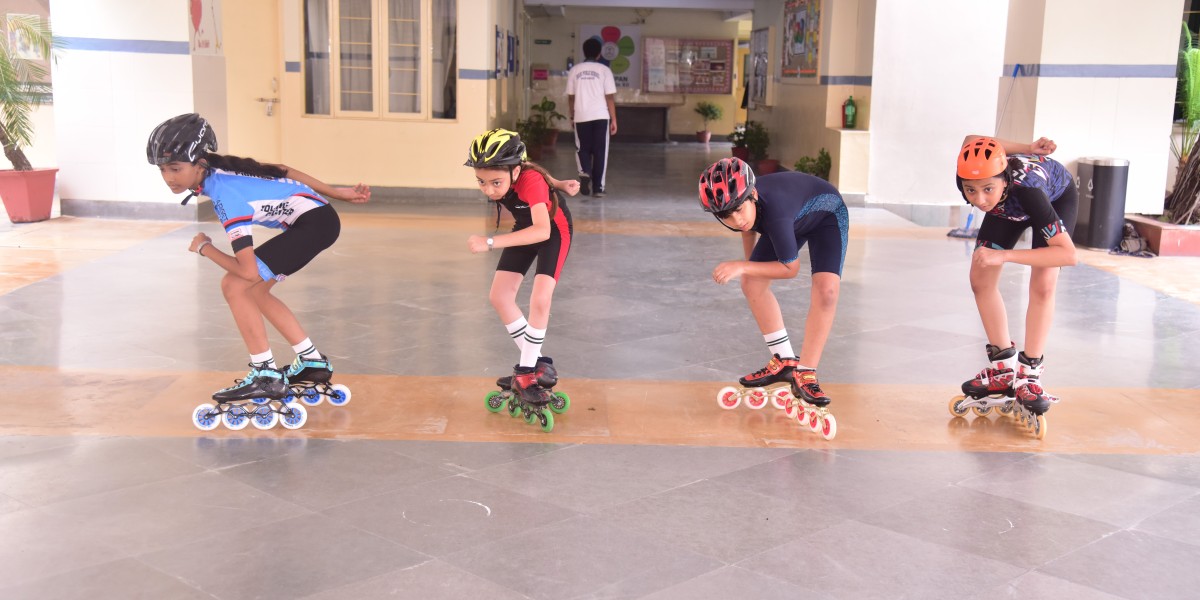
Sports facilities: Playgrounds and sports activities support physical fitness, teamwork, and discipline.
Activity spaces: Dedicated spaces for arts, music, and other activities allow students to explore their interests.
Parents should visit the campus and verify the actual availability and condition of these facilities.
5. Holistic Development Beyond Academic Results
Education should prepare children for life, not just examinations.
Students benefit from opportunities to develop communication, creativity, leadership, teamwork, and problem-solving skills.
Schools that provide a balanced combination of academic and extracurricular activities can help children discover their strengths.
Some valuable opportunities include:
Sports and physical education.
Music, dance, and performing arts.
Debates and public speaking.
Science exhibitions and creative projects.
Cultural celebrations and competitions.
Community service and environmental activities.
Participation in such activities can help students develop confidence and learn how to work effectively with others.
6. Focus on Student Safety and Well-Being
A positive learning environment must provide appropriate attention to student safety and emotional well-being.
Parents should understand the school's safety procedures before completing admission.
Some important areas to evaluate include:
Campus entry and visitor management.
Transportation safety arrangements.
Teacher and staff supervision.
Clean drinking water and sanitation.
Medical assistance and emergency procedures.
Anti-bullying policies and student support systems.
A school should also encourage respectful relationships between students, teachers, and parents.
Children learn more comfortably when they feel supported and secure.
7. Consider the School's Location and Accessibility
Daily commuting is another practical consideration when choosing an educational institution.
Varanasi has several residential and educational areas, including Lanka, BHU, DLW, Sigra, Rohania, Mohansarai, and Cantt.
Parents should consider how easily their children can travel to school and whether the daily journey fits their family routine.
Before making a decision, check:
Distance from home.
Travel time during school hours.
Availability of school transportation.
Bus routes and pickup arrangements.
Traffic conditions around the campus.
A convenient commute can help children maintain a healthy balance between school, studies, recreation, and family time.
8. Why Parents Should Compare Schools Before Admission
Every school has its own educational approach, facilities, and learning environment. What works well for one child may not necessarily be the right choice for another.
Instead of relying entirely on advertisements or online rankings, parents should compare schools using consistent criteria.
A useful comparison checklist includes:
| Selection factor | What parents should evaluate |
|---|---|
| Curriculum | Board affiliation and academic structure |
| Faculty | Teacher qualifications and experience |
| Infrastructure | Classrooms, laboratories, and library |
| Activities | Sports, arts, and extracurricular programmes |
| Safety | Supervision and safety procedures |
| Communication | Parent-teacher interaction |
| Accessibility | Distance and transportation |
| Admission | Eligibility, fees, and available classes |
Parents should also speak with school representatives and, where possible, understand the experiences of existing families.
9. Explore Educational Opportunities at Delhi Public School Varanasi
Parents researching school admission options can also explore Delhi Public School Varanasi as part of their educational comparison.
DPS Varanasi operates under the aegis of the Delhi Public School Society and follows a CBSE-affiliated educational framework.
Its educational approach focuses on academic development alongside creativity, confidence, discipline, and the development of responsible individuals.
When evaluating DPS Varanasi or any other institution, parents should explore the available academic programmes, campus facilities, extracurricular opportunities, admission guidelines, and transportation arrangements.
A personal campus visit can help families understand whether the school's environment and educational approach align with their expectations.
The official school website is an important resource for checking current information, including admission announcements and institutional details.
10. Make an Informed Decision for Your Child's Future
Choosing a school should be a thoughtful process rather than a decision based entirely on reputation or popularity.
Parents should consider their child's interests, educational needs, personality, and long-term aspirations.
It is equally important to maintain communication with teachers and support children's learning experiences at home.
Reading regularly, participating in creative activities, developing healthy routines, and encouraging curiosity can strengthen the educational foundation children receive at school.
When parents and educators work together, students are better positioned to develop confidence, independence, and a positive attitude towards learning.
Conclusion
Finding the right school requires careful consideration of academic quality, curriculum, teachers, facilities, student safety, and opportunities for overall development.
For parents exploring the Best School in Varanasi, the most suitable choice is an institution that recognises individual potential and creates an environment where students can learn, grow, and discover their abilities.
A good CBSE education should go beyond textbooks and examinations. It should prepare children to think independently, communicate confidently, and approach future challenges with responsibility.
Taking the time to research, compare, and visit schools can help parents make a decision that supports their children's educational journey and long-term success.