
Finding the right moisturizer can be challenging when you have oily skin, especially in Pakistan's warm and humid weather. Many people with oily skin avoid moisturizer because they worry it will make their face look greasier or cause breakouts. However, oily skin still needs hydration.
The important part is choosing a moisturizer that provides hydration without leaving a heavy, sticky, or excessively greasy finish.
A suitable moisturizer for oily skin in Pakistan should ideally have a lightweight texture, be comfortable in warm weather, and suit your skin's individual needs. If you are also prone to acne or clogged pores, choosing a non-comedogenic formula can be particularly useful.
This guide explains why oily skin needs moisturizer, which ingredients to look for, what to avoid, how Pakistan's climate can affect your choice, and how to build a simple moisturizing routine.
Does Oily Skin Really Need Moisturizer?
Yes. Oily skin can still become dehydrated.
Sebum is the natural oil produced by the skin, while hydration refers primarily to water content in the skin. Having excess oil does not necessarily mean that your skin has enough water.
This distinction becomes especially important if you use acne treatments or products designed to control oil. Ingredients such as salicylic acid, benzoyl peroxide, and topical retinoids can cause dryness or irritation in some people. Dermatologists often recommend moisturizer as part of acne care because it can help the skin tolerate these treatments.
When the skin becomes excessively dry or irritated, continuing an aggressive skincare routine can become difficult.
A moisturizer can help maintain comfort and support the skin barrier while allowing you to continue a consistent skincare routine.
Why Moisturizer Is Important for Oily Skin
There is a common misconception that moisturizer is only necessary for dry skin.
In reality, oily skin can benefit from appropriate hydration. The goal is not to add unnecessary oil to the skin but to provide hydration in a formulation that feels comfortable.
A good moisturizer can help:
Reduce feelings of dryness and tightness
Support the skin barrier
Improve comfort after cleansing
Reduce irritation caused by some acne treatments
Provide hydration without excessive greasiness
Make a skincare routine easier to maintain
The American Academy of Dermatology recommends that people with acne consider oil-free or non-comedogenic moisturizers, particularly when acne treatments cause dryness.
What Makes a Good Moisturizer for Oily Skin?
Not every moisturizer is designed for oily skin.
If your face becomes shiny quickly or feels greasy after applying skincare products, consider looking for a formula with the following characteristics.
1. Lightweight Texture
Texture is one of the first things to consider.
Gel, gel-cream, and lightweight lotion formulations are often more comfortable for oily skin than thick creams. Gel moisturizers are generally thinner and can feel lighter on the skin.
This can be especially useful during Pakistan's hotter months when heavy skincare products may feel uncomfortable.
However, a lightweight texture does not automatically make a moisturizer suitable for everyone. The ingredients and overall formulation still matter.
2. Non-Comedogenic Formula
If your oily skin is also prone to blackheads, whiteheads, or pimples, a non comedogenic moisturizer may be a good option.
"Non-comedogenic" generally means that a product is formulated to be less likely to block pores. It is not an absolute guarantee that the product will never cause breakouts, because individual skin responses vary.
Still, it can be a useful label to look for when choosing skincare for oily, acne-prone skin.
3. Oil-Free Formulation
An oil-free moisturizer can be appealing if your skin already produces a lot of oil.
Oil-free does not necessarily mean that the product will be better for everyone with oily skin, but it can provide a lighter-feeling option for people who dislike rich or greasy formulas.
The important thing is to look at the complete formulation rather than choosing a product based on one label alone.
4. Hydrating Ingredients
Oily skin still needs ingredients that help maintain hydration.
Some useful moisturizing ingredients include:
Glycerin
Hyaluronic acid
Panthenol
Ceramides
Niacinamide
Glycerin and hyaluronic acid are humectants that help attract and retain water. Ceramides support the skin barrier, while niacinamide is commonly used in skincare formulated for oily and blemish-prone skin.
The combination of hydrating ingredients and a lightweight texture can make a moisturizer more comfortable for oily skin.
Best Ingredients to Look for in a Moisturizer
Understanding the ingredient list can make choosing skincare much easier.
Glycerin
Glycerin is a common humectant used to improve skin hydration.
It can help attract water to the skin without requiring a thick, oily formulation.
Hyaluronic Acid
Hyaluronic acid is another popular humectant.
It can help the skin retain water and is often included in lightweight moisturizers. Because it does not need to be delivered in a heavy cream, it can work well in products designed for people who prefer lighter textures.
Niacinamide
Niacinamide, or vitamin B3, is widely used in skincare for oily and acne-prone skin.
Depending on the formulation and concentration, it can support the skin barrier and may help improve the appearance of excess oil and uneven skin tone.
Ceramides
Ceramides are lipids naturally found in the skin barrier.
They help support the barrier and reduce moisture loss. They can be particularly useful if your skincare routine includes ingredients that leave your skin dry or irritated.
Panthenol
Panthenol is a moisturizing ingredient that can help improve skin hydration and comfort.
It is commonly used in formulations designed for sensitive or irritated skin.
Ingredients You May Want to Avoid or Limit
There is no universal list of ingredients that every person with oily skin must avoid.
Instead, pay attention to how your skin responds.
You may want to be cautious with products that:
Feel excessively heavy or greasy
Cause persistent irritation
Make your skin feel congested
Contain fragrance that irritates your skin
Leave a thick residue that you dislike wearing during the day
This does not mean every rich ingredient is automatically bad for oily skin.
For example, some emollients and occlusives can be beneficial because they help reduce moisture loss. The issue is whether the overall formulation works for your skin.
Moisturizer for Oily Skin in Pakistan: Why Climate Matters
Pakistan's climate can make moisturizer selection more complicated.
Depending on the season and region, you may experience high temperatures, humidity, dry weather, or significant seasonal changes.
During hot and humid weather, a heavy moisturizer may feel uncomfortable. Sweat and natural oil production can also make the skin appear shinier throughout the day.
This is one reason many people with oily skin prefer lightweight formulations.
During colder or drier months, however, oily skin may still experience dryness or irritation. In that situation, completely abandoning moisturizer may not be the best solution.
Instead, you can adjust the amount and texture according to your skin's needs.
During Hot Weather
You may prefer:
Lightweight gel or gel-cream textures
Fast-absorbing formulas
Oil-free formulations
Non-comedogenic products
Smaller amounts of moisturizer
During Cooler or Dry Weather
You may need:
More consistent moisturizing
A slightly more hydrating formulation
Ingredients that support the skin barrier
Additional hydration if your skin feels tight or flaky
Your moisturizer does not necessarily need to remain exactly the same throughout the year.
How to Choose a Moisturizer for Oily Skin in Pakistan
When shopping for skincare, use a simple checklist.
Ask yourself:
Does it feel lightweight?
If the moisturizer feels excessively thick or greasy, it may not be comfortable for your skin.
Is it suitable for oily skin?
Look for formulations designed to provide hydration without a heavy finish.
Is it non-comedogenic?
This can be particularly useful if you frequently experience clogged pores or acne.
Does it contain hydrating ingredients?
Look for ingredients such as glycerin, hyaluronic acid, panthenol, or ceramides.
Does your skin tolerate it?
Even a well-formulated moisturizer may not suit every individual. Your skin's response is important.
Does it work with your existing routine?
Your moisturizer should fit comfortably alongside your cleanser, acne treatments, and sunscreen.
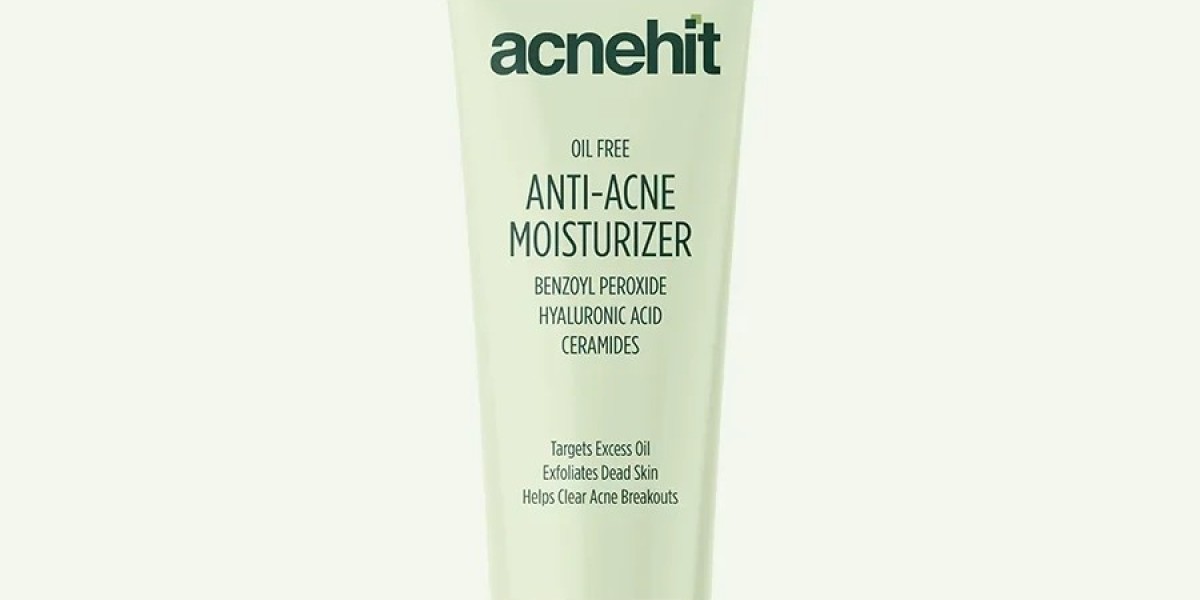
AcneHit Anti-Acne Moisturizer for Oily Skin
If you are looking for an everyday moisturizer as part of an acne-focused skincare routine, AcneHit Anti-Acne Moisturizer can be incorporated into your routine as the moisturizing step.
For oily skin, the purpose of a moisturizer is not to make the skin feel oily. It should provide comfortable hydration while fitting into a routine designed around your skin type.
This becomes particularly important if your routine includes acne-focused ingredients that can sometimes cause dryness or irritation.
Rather than treating moisturizer as an optional step, consider it part of maintaining a balanced skincare routine.
The most important factor is consistency. A moisturizer that feels comfortable enough to use regularly is generally more useful than a product that feels too heavy or irritating to wear.
How to Use Moisturizer for Oily Skin
The best moisturizer will not help much if you use it incorrectly or apply too much.
A simple morning routine can be:
Morning
Step 1: Cleanser
Use a gentle cleanser appropriate for oily skin.
Step 2: Treatment
If you use an acne treatment or serum, apply it according to the product's directions.
Step 3: Moisturizer
Apply a thin, even layer of moisturizer.
Step 4: Sunscreen
Finish with broad-spectrum sunscreen during the daytime.
Night
At night, you can keep your routine simple:
Cleanser
Acne treatment, if appropriate
Moisturizer
You do not need to apply a thick layer of moisturizer. Start with a small amount and adjust according to how your skin feels.
How Much Moisturizer Should You Apply?
More moisturizer does not necessarily mean better hydration.
For oily skin, applying too much can leave the face feeling greasy or uncomfortable.
Start with a small amount and spread it evenly across the face.
If your skin still feels dry after application, you may need more product or a more hydrating formula.
If your face becomes excessively greasy, try reducing the amount.
The ideal amount is enough to leave your skin comfortable without creating an unnecessarily heavy layer.
Common Moisturizer Mistakes People With Oily Skin Make
Skipping Moisturizer Completely
Oily skin still needs hydration.
Skipping moisturizer can be especially uncomfortable if you use acne treatments that cause dryness.
Choosing the Thickest Formula Available
A thick cream may be useful for very dry skin, but it may not be the most comfortable choice for someone with naturally oily skin.
Consider a lighter formulation first.
Using Too Much Product
Applying a large amount can make even a lightweight moisturizer feel greasy.
Start with a small amount and increase it only if necessary.
Washing Your Face Too Frequently
Trying to remove every trace of oil can irritate the skin.
A gentle cleansing routine is usually more practical than repeatedly washing your face throughout the day.
Changing Products Too Quickly
If you change several products at once, it becomes difficult to identify what is causing improvement or irritation.
Introduce new products gradually whenever possible.
Can Moisturizer Make Oily Skin More Oily?
A moisturizer does not necessarily increase your skin's natural oil production.
However, a rich or poorly suited product may make the skin feel oilier because it leaves a heavier layer on the surface.
If your face looks excessively shiny after moisturizing, consider using a smaller amount or choosing a lighter formulation.
It is also important to distinguish between oiliness and hydration. A moisturizer can hydrate the skin without adding excessive surface oil.
Should You Use Moisturizer if You Have Acne?
Yes, moisturizer can still be an important part of an acne-focused routine.
Some acne treatments can cause dryness and irritation. The American Academy of Dermatology notes that moisturizers can help people tolerate acne treatments such as benzoyl peroxide, salicylic acid, and topical retinoids.
For acne-prone skin, look for products labeled oil-free, non-comedogenic, or "won't clog pores."
However, moisturizer should not be considered an acne treatment by itself. Persistent, painful, severe, or scarring acne may require evaluation and treatment from a dermatologist.
How to Build a Simple Oily-Skin Routine
You do not need a complicated 10-step routine to care for oily skin.
A simple routine can include:
Morning
Gentle cleanser
Lightweight moisturizer
Broad-spectrum sunscreen
Evening
Gentle cleanser
Appropriate acne treatment if needed
Moisturizer
The purpose of this routine is to keep your skin clean, hydrated, and protected without repeatedly stripping it.
If you experience persistent irritation, burning, severe dryness, or worsening acne, consider simplifying your routine and speaking with a dermatologist.
Final Thoughts
Choosing the best moisturizer for oily skin in Pakistan is not about finding the thickest, strongest, or most expensive product.
It is about finding a formula that provides enough hydration while remaining comfortable on oily skin.
Look for a lightweight texture, hydrating ingredients, and, if you are prone to clogged pores, a non-comedogenic formulation. During Pakistan's hot and humid weather, a lighter moisturizer may be more comfortable, while your skin may require additional hydration during cooler or drier periods.
Most importantly, do not assume that oily skin means you should skip moisturizer.
A well-chosen moisturizer can support your skin barrier, improve comfort, and make an acne-focused skincare routine easier to maintain.
For people looking for a product designed around an acne-focused routine, AcneHit Anti-Acne Moisturizer can be used as the moisturizing step after cleansing and appropriate treatments.
The right moisturizer is ultimately the one your skin tolerates well, provides the hydration you need, and feels comfortable enough to use consistently.
Frequently Asked Questions
1. Which moisturizer is best for oily skin in Pakistan?
A lightweight, non-comedogenic moisturizer can be a good choice for oily skin, particularly in hot or humid weather. Look for hydrating ingredients without an excessively heavy texture.
2. Can oily skin use moisturizer every day?
Yes. Oily skin can still need daily hydration. A lightweight moisturizer can help maintain skin comfort without necessarily making the face excessively greasy.
3. Should oily skin use an oil-free moisturizer?
An oil-free moisturizer can be a convenient choice if you prefer lightweight skincare or dislike the feel of facial oils. However, the overall formulation matters more than the oil-free label alone.
4. Is gel moisturizer good for oily skin?
Gel moisturizers are often popular with oily skin because they tend to have a lighter texture than traditional creams. However, individual skin response still matters.
5. Can moisturizer cause pimples?
A moisturizer can contribute to breakouts in some individuals if the formulation does not suit their skin. If you frequently experience clogged pores, consider a non-comedogenic product and monitor your skin's response.
6. Should I moisturize if I have oily and acne-prone skin?
Yes. Oily and acne-prone skin can still become dry or irritated, particularly when using acne treatments. A suitable moisturizer can help maintain hydration and comfort.
7. How much moisturizer should I use on oily skin?
Start with a small amount and apply a thin, even layer. You can increase the amount if your skin feels dry, but applying too much may leave oily skin feeling unnecessarily greasy.
8. Can I use moisturizer in summer in Pakistan?
Yes. You may simply prefer a lighter formulation during hot weather. Gel or lightweight moisturizers can be more comfortable when temperatures and humidity are high.
9. What ingredients should I look for in a moisturizer for oily skin?
Common useful ingredients include glycerin, hyaluronic acid, niacinamide, panthenol, and ceramides. The best combination depends on your individual skin needs and the complete formulation.
10. Should I use sunscreen after moisturizer?
Yes. In a typical morning routine, apply moisturizer before sunscreen. Use a broad-spectrum sunscreen as the final skincare step before makeup, if applicable.










