
Changes in penile shape, painful erections, and difficulties during sexual intercourse can be concerning for any man. While some degree of natural penile curvature is normal, a newly developed or progressively worsening bend may indicate an underlying medical condition known as Peyronie's disease.
Peyronie's disease is a condition in which fibrous scar tissue develops inside the penis, affecting its ability to expand normally during an erection. As a result, the penis may bend in one direction, become shorter, or develop an unusual shape. In more severe cases, the condition can interfere with sexual intercourse and may occur alongside erectile dysfunction.
Although many men feel uncomfortable discussing these symptoms, Peyronie's disease is a recognized urological condition. It is important to understand that the problem is not simply cosmetic. It can affect physical comfort, sexual performance, emotional health, and relationships.
Fortunately, different medical approaches are available to manage Peyronie's disease. Depending on the severity of the curvature and the patient's overall health, treatment may involve monitoring, medication for pain, injectable therapies, penile traction, or surgery.
This article explores the important aspects of Peyronie's disease, helping men understand its development, recognize potential symptoms, and learn when professional medical attention is necessary.
What Exactly Is Peyronie's Disease?
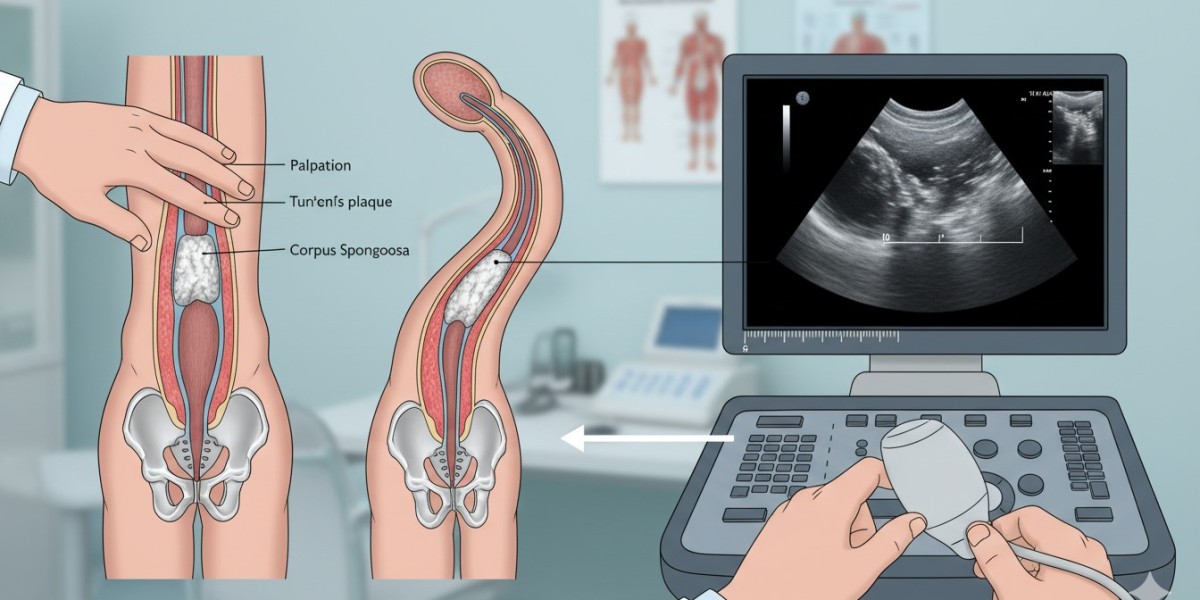
Peyronie's disease is an acquired penile condition characterized by the formation of fibrous scar tissue, commonly called plaque, inside the tunica albuginea.
The tunica albuginea is a strong but flexible layer of tissue surrounding the two main erectile chambers of the penis, known as the corpora cavernosa.
Under normal circumstances, these chambers fill with blood during sexual stimulation. The penis expands and becomes firm while the surrounding tissue stretches to accommodate the increased volume.
In men with Peyronie's disease, scar tissue develops within the surrounding membrane. Unlike healthy tissue, the plaque does not stretch normally. Consequently, one part of the penis becomes less flexible than the other, producing an abnormal curve during an erection.
The condition can cause different types of penile deformities, including:
Upward curvature.
Downward curvature.
Left or right-sided bending.
Indentation along the penile shaft.
Hourglass-shaped narrowing.
Loss of penile length.
The appearance depends on the location and extent of the plaque.
Peyronie's disease is not contagious and cannot be transmitted through sexual activity. It is also not a form of cancer or a sexually transmitted infection.
Why Does Peyronie's Disease Develop?
The development of Peyronie's disease is associated with abnormal wound healing within the penile tissues.
In many cases, small injuries to the penis may trigger an unusual healing response. These injuries can happen during sexual intercourse, accidental bending, or other physical activities.
Normally, damaged tissue repairs itself through a controlled process. However, in some men, excessive fibrous tissue develops during healing.
This tissue gradually becomes hardened and forms plaques that interfere with the normal flexibility of the penis.
Interestingly, many men diagnosed with Peyronie's disease do not remember any specific injury. This suggests that repeated minor trauma and individual biological susceptibility may both contribute to the condition.
Important Factors That May Contribute to Peyronie's Disease
1. Penile Trauma
An injury to the erect penis can damage the tunica albuginea. If the healing process becomes abnormal, scar tissue may develop at the injured location.
2. Abnormal Tissue Repair
The body uses collagen to repair damaged tissues. In Peyronie's disease, excessive collagen deposition may contribute to fibrous plaque formation.
3. Genetic Susceptibility
Some men may have an inherited tendency to develop abnormal scar tissue. Family history and certain connective tissue disorders may increase susceptibility.
4. Diabetes
Diabetes can affect blood vessels, nerve function, and tissue healing. It may also contribute to erectile dysfunction, which can complicate the management of Peyronie's disease.
5. Cardiovascular Conditions
High blood pressure, elevated cholesterol, and vascular disease are associated with erectile difficulties and may coexist with Peyronie's disease.
6. Increasing Age
The condition is more frequently diagnosed in middle-aged and older men. However, it is not limited to older age groups and can also affect younger adults.
Signs and Symptoms Men Should Not Ignore
Peyronie's disease does not produce identical symptoms in every patient. Some men experience minor changes in penile shape, while others develop significant curvature and pain.
The symptoms may appear gradually and become more noticeable over time.
Abnormal Curvature During Erection
A noticeable bend during an erection is usually the most recognizable sign.
The penis may curve upward, downward, or sideways, depending on the position of the scar tissue.
Mild curvature may not interfere with sexual activity. However, severe bending can make penetration uncomfortable or difficult.
Painful Erections
Pain is particularly common during the active stage of Peyronie's disease.
The discomfort may occur because the affected tissue is stretched as the penis becomes erect.
Some men experience pain only during erections, while others notice tenderness when touching the affected area.
Hard Plaques Beneath the Skin
Scar tissue may develop into firm areas that can sometimes be felt beneath the penile skin.
These plaques may appear as hardened lumps along the shaft.
Their location and size can influence the severity of penile curvature.
Reduction in Penile Length
Peyronie's disease may cause a reduction in penile length because scar tissue restricts normal tissue expansion.
Some men notice that their penis appears shorter, particularly when the curvature becomes more pronounced.
Erectile Dysfunction
Erectile dysfunction (ED) is another possible concern.
Some men with Peyronie's disease have difficulty achieving or maintaining an erection because of underlying blood circulation problems, pain, anxiety, or structural abnormalities.
ED may occur independently or alongside the penile deformity.
Difficulty With Sexual Activity
Significant curvature can interfere with penetration and make intercourse painful for either partner.
This may reduce sexual satisfaction and create concerns about intimacy and performance.
Hourglass Deformity
Some men develop a narrow section in the middle of the penis.
This indentation creates an hourglass-like appearance and can sometimes make the penile shaft less stable during erections.
How Does Peyronie's Disease Progress?
Peyronie's disease generally develops through two main stages. Understanding the difference helps doctors determine which treatment approaches may be suitable.
The Active or Inflammatory Stage
During the active stage, the condition is still changing.
Men may notice that the curvature is increasing or that new plaques are developing.
Common features include:
Pain during erections.
Increasing penile curvature.
Development of hardened tissue.
Changes in penile shape.
Possible shortening or indentation.
The active stage may continue for several months or longer.
During this period, treatment often focuses on controlling discomfort, monitoring deformity, and managing associated erectile problems.
The Stable or Chronic Stage
The stable stage begins when the penile curvature and other physical changes stop progressing significantly.
Pain often becomes less noticeable, but the existing scar tissue may remain.
Some men have a stable curvature that does not interfere with sexual activity. Others continue to experience substantial deformity.
Surgery is generally considered after the condition has stabilized when the curvature causes significant functional problems.
How Is Peyronie's Disease Different From Normal Penile Curvature?
Not every curved penis indicates a medical problem.
Some men naturally have a slight upward, downward, or sideways curve. If the curvature has been present since puberty and does not cause pain or interfere with sexual activity, it may represent congenital penile curvature rather than Peyronie's disease.
The main difference is that Peyronie's disease is generally acquired later in life.
| Normal or congenital curvature | Peyronie's disease |
|---|---|
| Usually present from an early age | Develops after previously normal penile development |
| Often remains relatively unchanged | May progress during the active stage |
| Usually has no scar plaque | Associated with fibrous plaque formation |
| Usually painless | May cause painful erections |
| Does not typically cause acquired shortening | May cause penile shortening |
A medical examination is necessary to distinguish between these conditions accurately.
How Do Doctors Diagnose Peyronie's Disease?
A urologist usually diagnoses Peyronie's disease through a combination of medical history, physical examination, and selected investigations.
The goal is to identify the plaque, understand the degree of curvature, evaluate erectile function, and determine whether treatment is necessary.
Medical History
The doctor will ask about when the curvature started, whether it is changing, and whether pain or erectile dysfunction is present.
Other questions may concern previous penile injuries, sexual function, and existing health conditions.
Physical Examination
The penis may be examined to identify hardened plaques, tenderness, and areas of abnormal tissue.
This can help the doctor understand the location and characteristics of the scar tissue.
Erection Assessment
Photographs of the erect penis from different angles may help document the direction and degree of curvature.
In selected cases, a medically induced erection can be used during an examination to assess penile deformity.
Ultrasound and Doppler Imaging
Penile ultrasound can help identify plaques and evaluate the surrounding structures.
Doppler ultrasound may be recommended when erectile dysfunction is present to assess blood circulation within the penis.
Not every patient requires imaging. The urologist determines which tests are appropriate.
Available Treatment Options for Peyronie's Disease
Treatment is individualized because the condition varies considerably between patients.
A man with mild curvature and satisfactory sexual function may not need the same treatment as someone with severe deformity and erectile dysfunction.
The main treatment goals are to reduce pain, improve penile straightness when necessary, preserve erectile function, and restore comfortable sexual activity.
1. Observation and Follow-Up
Not every case requires immediate medical intervention.
Men with mild curvature, minimal discomfort, and satisfactory sexual function may be managed through regular monitoring.
The doctor can assess whether the curvature is stable or becoming more severe.
Observation is particularly appropriate when the symptoms do not interfere significantly with sexual activity.
2. Medication for Pain Relief
During the active stage, pain may become an important concern.
A healthcare professional may recommend suitable anti-inflammatory medication, such as NSAIDs, to help control discomfort.
However, these medications do not reliably remove established scar tissue or permanently correct penile curvature.
3. Collagenase Injection Therapy
Collagenase clostridium histolyticum is an injectable treatment used in selected men with Peyronie's disease.
The enzyme works by breaking down certain collagen components within the plaque.
A trained healthcare professional injects the medication directly into the affected tissue, followed by a specific treatment and penile modeling protocol.
In the United States, this treatment is approved for selected adults with a palpable plaque and penile curvature greater than 30 degrees.
Potential side effects include bruising, swelling, tenderness, and bleeding. Rare but serious complications, including penile fracture, may occur.
Availability and approved indications vary between countries.
4. Penile Traction Treatment
Penile traction therapy involves a specialized device designed to apply controlled stretching to the penis.
The purpose is to improve penile length and potentially reduce curvature.
Some men may benefit from traction therapy alone, while others use it as part of a broader treatment plan.
Potential benefits include:
Improvement in penile curvature.
Preservation or improvement of penile length.
Reduction in selected deformities.
Support during nonsurgical management.
Treatment results depend on the device, duration of use, and individual response.
Incorrect use or excessive stretching can cause injury, so professional instructions are important.
5. Verapamil Injections
Verapamil is a medication that has been studied for direct injection into Peyronie's plaques.
It may influence collagen production and scar tissue remodeling.
However, research findings are inconsistent, and its effectiveness is less firmly established than that of collagenase in appropriately selected patients.
6. Interferon Therapy
Interferon-alpha-2b has also been investigated as an injection treatment.
It may influence the processes involved in excessive scar tissue formation.
Some studies have reported improvements in penile curvature and plaque characteristics, but its availability and clinical use vary.
7. Shockwave Therapy
Shockwave therapy uses acoustic energy delivered to the affected penile tissues.
Although it has been investigated for Peyronie's disease, current evidence does not establish it as an effective treatment for correcting penile curvature.
It may help with penile pain in selected cases, but it should not be considered a proven method for removing plaques or restoring normal penile shape.
8. Treatment for Erectile Dysfunction
Men experiencing both Peyronie's disease and ED may require treatment for their erection difficulties.
Depending on individual medical needs, a doctor may recommend:
PDE5 inhibitors such as sildenafil or tadalafil.
Management of diabetes and blood pressure.
Lifestyle modifications.
Vacuum erection devices.
Penile prosthesis implantation in selected cases.
Treating erectile dysfunction is important because adequate erection quality can influence the choice and outcome of Peyronie's disease treatment.
9. Surgical Correction
Surgery is generally considered when penile curvature is stable and significantly interferes with sexual activity.
The choice of procedure depends on the severity of the deformity, existing penile length, and erectile function.
Penile Plication Surgery
Penile plication involves placing sutures on the longer side of the penis to straighten the shaft.
It is generally suitable for men with adequate penile length and satisfactory erectile function.
Possible disadvantages include penile shortening, residual curvature, and changes in sensation.
Plaque Incision or Excision With Grafting
This procedure may be recommended for severe curvature or complex deformities.
The surgeon makes an incision in the plaque or removes part of it when appropriate. A graft is then used to cover the affected area.
Potential complications include erectile dysfunction, reduced sensation, graft contraction, and recurrent curvature.
Penile Prosthesis Surgery
For men with significant erectile dysfunction that does not respond to other treatments, a penile prosthesis may be an appropriate option.
The implant helps provide the rigidity needed for sexual intercourse. Additional straightening procedures may be performed if necessary.
Can Peyronie's Disease Affect a Man's Confidence?
The emotional effects of Peyronie's disease are often overlooked.
Changes in penile appearance, painful erections, and difficulties with intercourse may cause embarrassment and anxiety.
Some men become concerned about their sexual performance or avoid intimate relationships because they fear pain or rejection.
These feelings can affect confidence and create relationship difficulties.
It is important to remember that Peyronie's disease is a medical condition, not a personal failure. Seeking professional help can reduce uncertainty and provide access to appropriate treatment.
Open communication between partners may also help maintain intimacy and reduce unnecessary stress.
In some cases, psychological counseling or sex therapy can provide additional support.
Can Peyronie's Disease Be Prevented?
There is currently no guaranteed way to prevent Peyronie's disease because its exact cause is not fully understood.
However, reducing the risk of penile injuries may help address one potential contributing factor.
Helpful precautions include:
Avoiding forceful bending of the erect penis.
Using adequate lubrication when needed during sexual activity.
Avoiding positions that cause excessive penile bending.
Seeking medical attention after significant penile trauma.
Managing diabetes and cardiovascular risk factors.
Avoiding unapproved penile enlargement devices or aggressive stretching techniques.
These steps support general penile health but cannot guarantee prevention.
When Should You Seek Medical Attention?
A medical consultation is recommended if you notice a new or worsening penile curve, hardened tissue beneath the skin, painful erections, shortening, or erectile difficulties.
A urologist can assess the condition and determine whether treatment is required.
Do not delay medical attention if symptoms are progressively worsening or interfering with sexual activity.
A sudden injury accompanied by a popping sound, severe pain, bruising, rapid swelling, or immediate loss of erection requires emergency assessment because it may indicate a penile fracture.
Frequently Asked Questions
1. Is Peyronie's disease a serious medical condition?
Peyronie's disease is generally not life-threatening, but it can significantly affect sexual function, penile shape, confidence, and quality of life. Medical evaluation is recommended when symptoms develop.
2. What is the first noticeable sign of Peyronie's disease?
A newly developed bend during an erection is a common first noticeable sign. Some men initially detect a hard lump or experience painful erections.
3. Can Peyronie's disease cause permanent curvature?
Yes. Established scar tissue may result in persistent curvature. Some men require treatment to improve penile straightness and sexual function.
4. Does Peyronie's disease cause erectile dysfunction?
It can occur alongside erectile dysfunction. Pain, anxiety, structural changes, and underlying vascular conditions may all contribute to erection difficulties.
5. Can Peyronie's disease improve without surgery?
Yes. Selected patients can benefit from observation, collagenase injections, penile traction therapy, and appropriate treatment of associated erectile dysfunction.
6. Are Peyronie's disease injections safe?
Injection treatments may be appropriate for selected patients, but they carry potential side effects. Collagenase injections, in particular, must be administered according to approved protocols by trained professionals.
7. Does Peyronie's disease affect fertility?
The condition does not directly damage sperm production. However, severe curvature or erectile dysfunction can make intercourse and natural conception more difficult.
8. Can younger men develop Peyronie's disease?
Yes. Although it is more common in middle-aged and older men, younger adults can also develop it.
9. Does Peyronie's disease disappear naturally?
Pain may improve as the condition becomes stable, but established plaque and curvature often remain.
10. Which specialist treats Peyronie's disease?
A urologist or specialist in male sexual medicine is qualified to evaluate the condition and discuss appropriate treatment options.
Final Thoughts
Peyronie's disease can affect several aspects of men's health, from penile appearance and erection quality to sexual confidence and relationships. The condition develops when fibrous scar tissue forms inside the penis, preventing normal expansion and causing abnormal curvature.
Although the symptoms can be concerning, men have several treatment options depending on the stage and severity of the condition. These include medical monitoring, pain management, injections, traction therapy, erectile dysfunction treatment, and surgical correction.
The most important step is to recognize unusual changes and seek professional medical advice. Early evaluation helps identify the problem, clarify treatment possibilities, and prevent unnecessary anxiety.
Men should not feel embarrassed about discussing penile curvature or sexual difficulties with a qualified urologist. With appropriate medical guidance, many patients can achieve meaningful improvements in comfort, sexual function, and quality of life.
Medical Disclaimer: This article is intended for general educational purposes and does not replace professional medical advice, diagnosis, or treatment. Always consult a qualified urologist before starting any medication, injection, traction device, or surgical procedure.