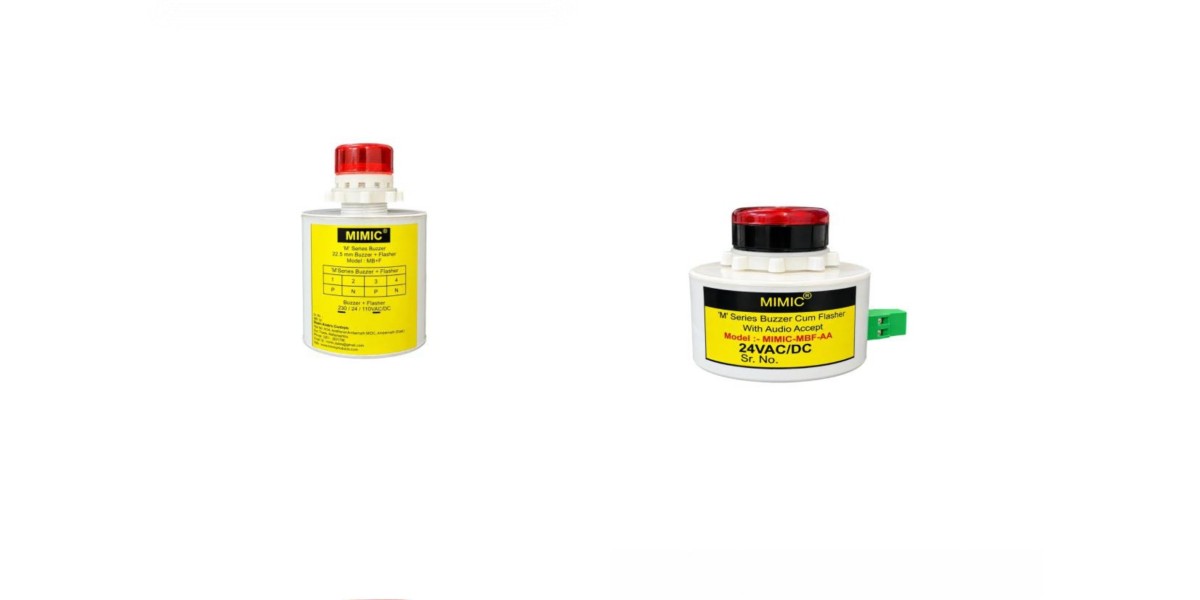

An Industrial flasher buzzer provides one straightforward way to communicate selected operating conditions. By combining an audible buzzer with a flashing light, it helps draw attention when a connected control circuit activates the warning. This makes the device relevant to many applications involving electrical switchgear, machinery, and industrial monitoring.
For businesses planning or upgrading their signalling arrangements, selecting a suitable buzzer-cum-flasher can contribute to clearer communication between equipment and personnel.
The Importance of Signalling in Automated Systems
Automation systems can operate with limited direct supervision, but they still depend on people to monitor performance, investigate unexpected conditions, and carry out maintenance.
A controller may detect a machine stop, a process condition, or a signal from another connected component. That information can be used to activate an audible and visual warning. The warning helps notify personnel that they should check the relevant equipment or control system.
Without a clear indication, an operator may not immediately notice a change, particularly when several machines are running at the same time. A combined warning device can provide an additional notification point within the overall automation design.
What an Industrial Flasher Buzzer Brings to the System
An Industrial flasher buzzer combines two forms of signalling:
Audible warning: The buzzer produces a sound when activated by the connected circuit. This can help attract attention when the operator is looking elsewhere.
Flashing visual warning: The light flashes to provide a visible indication. When the device is installed near the relevant machine or panel, it can help personnel identify where the alert is coming from.
Together, these functions provide a compact signalling arrangement. The exact sound, light behaviour, voltage, and installation requirements depend on the selected model.
The device should be treated as an output indicator. It responds to a signal from the control system; it does not independently detect or diagnose the underlying machine condition.
Applications Across Industrial Installations
1. Automation Control Panels
Automation panels contain controllers, relays, power supplies, and other components that coordinate machine operations. A buzzer-cum-flasher can be connected to an appropriate output to provide a warning when a programmed condition occurs.
2. Electrical Switchgear
Switchgear installations may require clear indication of selected equipment conditions. A combined audible and visual device can be considered as part of the panel's signalling arrangement, provided the product is suitable for the electrical and environmental requirements.
3. Production Machinery
Manufacturing machines may use warning circuits to communicate a stop condition or another monitored event. A flasher buzzer can help make the signal noticeable to nearby operators.
4. Material Handling Systems
Conveyors and material-handling equipment often operate across busy work areas. Where the control system generates an alert, an audible and visual indicator can help draw attention to the relevant section.
5. Process and Utility Equipment
Pumps, compressors, and other industrial utility systems may use electrical monitoring and control arrangements. A warning device can be incorporated where a suitable output signal is available and the product matches the installation requirements.
Selecting the Correct Voltage and Configuration
One of the most important steps when purchasing an Industrial flasher buzzer is matching the device to the electrical supply.
Industrial installations may use different AC and DC control voltages. A product designed for one supply should not be assumed suitable for another. Buyers should verify the exact voltage rating on the individual product specification and confirm the circuit arrangement before installation.
Other selection factors include:
Sound level: Consider the background noise and distance from the operator.
Light visibility: Check whether the flashing indication can be seen from the intended position.
Mounting dimensions: Confirm the required panel opening and available installation depth.
Environmental suitability: Review the stated protection rating and operating limits for the actual site.
Control output: Make sure the relay, PLC, or other circuit can operate the selected device as specified.
Maintenance access: Consider whether the unit can be inspected and tested conveniently.
A product should be selected on the basis of its specifications and application, not simply because it belongs to a familiar product category.
Why Consider Mimic Products?
Mimic Products offers a range of buzzer-cum-flasher devices for electrical switchgear and industrial warning applications. The category features different models and voltage options, giving buyers a selection to review when planning panel-based signalling.
The range includes BZ-series models such as BZ-1, BZ-2, BZ-3, BZ-4, and BZ-5. These products are intended for different electrical requirements, so it is important to check the specifications of the exact model being considered.
For panel manufacturers, maintenance professionals, automation integrators, and industrial buyers, the category provides a convenient starting point for comparing available options.
Explore the range here: Mimic Products – Buzzer Cum Flasher.
Mimic Products focuses on electrical switchgear and signalling products, making its buzzer-cum-flasher range relevant to businesses looking for components to support audible and visual indication in industrial applications.
Integrating the Warning with Control Logic
A warning device is only as useful as the control arrangement that activates it. Before installation, define which condition should trigger the alert and what response is expected from the operator.
For example, a control panel may activate the warning when a monitored machine condition occurs. The operator can then check the panel indication, controller display, or machine instructions to identify the required action.
The signal should be meaningful and consistent. Avoid unnecessary activation, unclear warning assignments, or arrangements that make it difficult to identify the affected machine. Labels and operating instructions can help personnel understand each alert.
Electrical integration should be planned by competent personnel. Confirm the rated voltage, output compatibility, wiring method, and manufacturer's installation instructions before energising the circuit.
Testing and Maintenance
After installation, test the device using the actual control arrangement. Confirm that the buzzer sounds and the light flashes when the intended signal is applied. Check that the indication is visible and audible from the relevant working area.
Include the device in routine inspection activities. Look for loose connections, physical damage, mounting problems, and changes in the surrounding environment that could affect visibility or audibility.
If the automation programme or panel wiring is changed, review the warning circuit to ensure it still performs the intended function.
Conclusion
Automation and switchgear systems need effective ways to communicate selected equipment conditions to the people responsible for operating and maintaining them. An Industrial flasher buzzer combines sound and flashing light in one signalling device, helping make alerts more noticeable in suitable industrial applications.
Mimic Products offers a selection of buzzer-cum-flasher models for different electrical requirements. Visit the product category, compare the individual specifications, and choose a model that fits your control panel, automation system, or equipment-monitoring application.