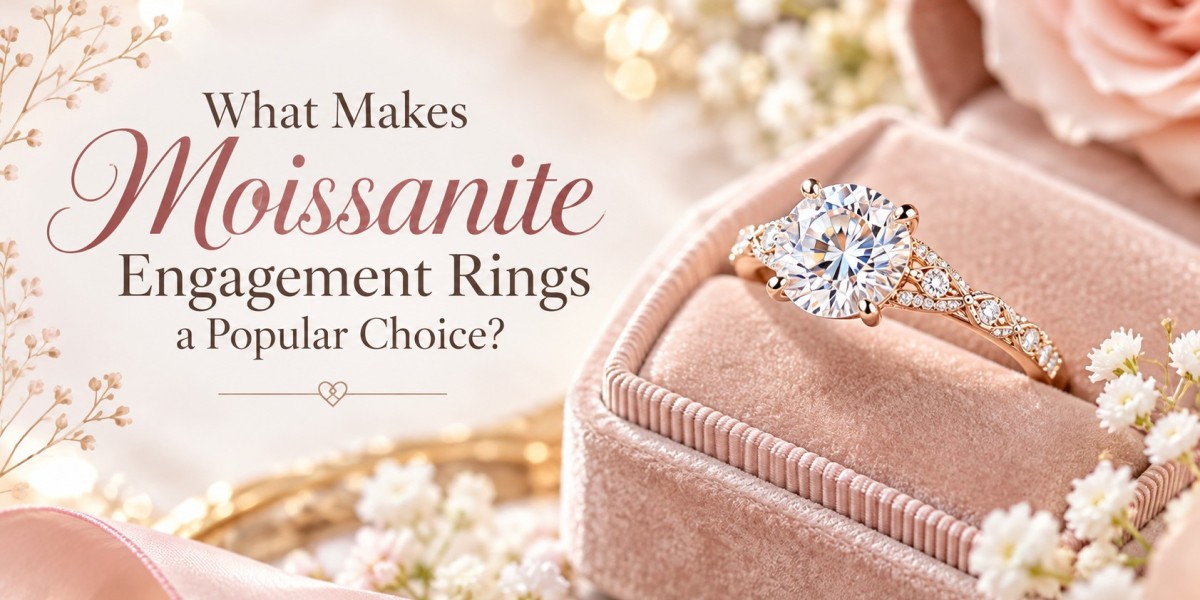

Choosing an engagement ring is exciting, but comparing gemstones can feel confusing. Many couples want a ring that looks beautiful, fits their budget and remains practical for daily wear. That combination explains why moissanite has gained attention among modern jewelry shoppers.
Moissanite engagement rings appeal to buyers who appreciate noticeable sparkle without paying the typical price of a comparable natural diamond. They also offer flexibility in stone size and setting design. Before choosing one, it helps to understand what makes this gemstone different.
What Is Moissanite?
Moissanite is a gemstone made from silicon carbide. Natural moissanite is extremely rare, so jewelry-grade stones are generally created in laboratories. Although it can resemble a diamond, moissanite is not a diamond or a lab-grown diamond. Each material has different physical and optical properties.
One distinctive feature is its colorful sparkle, sometimes called fire. Moissanite splits light into rainbow flashes that may appear especially noticeable under bright lighting. Whether that appearance is appealing comes down to personal taste.
Why Are Moissanite Engagement Rings So Popular?
Several practical benefits explain their appeal. Here are the features worth considering before deciding whether moissanite suits your partner.
1. Bright Sparkle With Distinctive Rainbow Flashes
Moissanite has a high refractive index, allowing it to return plenty of light. It also shows stronger dispersion than diamond, so you may notice more colorful flashes as the gemstone moves.
This makes a round brilliant moissanite especially striking under store lights or in sunlight. However, shoppers who prefer the more restrained sparkle of a diamond should compare both stones in different lighting conditions before committing.
2. More Room in Your Jewelry Budget
Price is a major reason couples consider moissanite. A moissanite center stone generally costs less than a comparable natural diamond, although the final ring price still depends on the metal, craftsmanship and setting.
That difference can leave room for a larger-looking stone or a more detailed design. You might also decide to keep the ring simple and put the remaining budget toward a honeymoon, wedding expenses or shared savings. The important point is choosing a price that feels comfortable.
3. Strong Durability for Regular Wear
Moissanite measures about 9.25 on the Mohs hardness scale, compared with diamond at 10. This makes it highly resistant to scratching during normal use, although no gemstone is completely damage-proof.
The setting needs attention too. Prongs can loosen over time, while a tall ring may catch on clothing. Regular inspections and careful handling can help keep an engagement ring secure.
4. Plenty of Choices in Shapes and Settings
Moissanite engagement rings are available in classic styles as well as more distinctive designs. Round and oval stones are popular choices, but pear, emerald-cut and cushion shapes can create very different looks.
At Venust Diamonds, shoppers can compare moissanite engagement rings with different center stones and settings. Consider your partner's existing jewelry when choosing between a delicate band, a vintage-inspired design or a bold centerpiece.
5. A Lab-Created Gemstone Option
Most moissanite sold for fine jewelry is laboratory-created rather than mined. This appeals to shoppers who prefer a gemstone without direct gemstone mining.
Laboratory production still uses energy and other resources, while ring metals have their own sourcing considerations. If responsible purchasing matters to you, ask the jeweler about manufacturing details and metal sourcing instead of relying only on broad sustainability claims.
Popular Moissanite Ring Styles to Consider
The setting changes how a ring looks on the hand. Start with the design your partner would feel comfortable wearing.
Solitaire: A single center stone creates a clean, timeless appearance.
Halo: Smaller accent stones surround the center for extra visual detail.
Three-stone: Three gems create a balanced look with personal symbolism.
Hidden halo: Accent stones sit beneath the center and show from certain angles.
Bezel: A metal rim surrounds the stone's edge for a smooth, contemporary profile.
Think about the height of the setting as well. A lower profile may be easier to manage during daily activities than a ring with a raised center stone.
How Does Moissanite Compare With Diamond?
Moissanite and diamond can look similar from a distance, but they are different gemstones. Moissanite generally produces stronger rainbow flashes. Diamond has the higher hardness rating, while moissanite remains a durable choice for jewelry.
The cost difference can be significant when comparing similar-looking natural diamond rings, but prices vary by quality and seller. Lab-grown diamonds are another alternative, so compare all three if gemstone identity matters to your partner. Avoid choosing moissanite solely because someone might mistake it for diamond.
What Should You Check Before Buying?
A great-looking photograph is only a starting point. Check the actual gemstone dimensions because moissanite listings may use diamond-equivalent carat sizes rather than the stone's physical weight.
Review these details before placing an order:
Stone appearance: Check videos in natural and indoor light.
Metal choice: Compare 14K or 18K gold with platinum based on preference and care needs.
Ring size: Confirm the correct size before requesting engraving.
Seller policies: Check warranties, resizing eligibility, return conditions and delivery estimates.
Timing matters when you plan a proposal or custom order. Our guide to the Best Time to Buy an Engagement Ring explains how to compare shopping periods and plan around important dates.
Are There Any Drawbacks to Consider?
Moissanite is not the ideal choice for everyone. Its pronounced rainbow sparkle can look different from the diamond appearance some shoppers expect. Buyers who specifically want a diamond should not treat moissanite as an identical substitute.
Resale expectations matter as well. Jewelry resale prices are uncertain, so purchasing a moissanite ring should focus on personal enjoyment rather than future investment value.
Frequently Asked Questions
Can moissanite engagement rings be worn every day?
Yes. Moissanite is hard enough for regular wear, but the ring still benefits from sensible care. Remove it during activities that could damage the setting and have loose prongs checked by a jeweler.
Does moissanite lose its sparkle over time?
The gemstone does not normally lose its optical properties with age. However, oils, soap residue and dirt can reduce its visible shine. Gentle cleaning can restore its appearance.
Is moissanite a real gemstone?
Yes. Moissanite is a distinct gemstone made of silicon carbide. Most stones used in engagement jewelry are lab-created, but they are not imitation plastic or lab-grown diamonds.
Final Thoughts
Moissanite engagement rings remain an attractive option because they combine strong durability, colorful sparkle and flexible design choices. They can be especially appealing to couples who value personal style while keeping spending under control.
The right ring is one your partner genuinely loves. Compare the sparkle in person or through reliable videos, confirm the setting details and choose a design that fits everyday life.