
Introduction
Choosing the right device involves more than checking whether it fits the panel. The electrical supply, warning requirements, mounting dimensions, operating environment, and control arrangement all need to be considered. A careful selection process helps avoid compatibility issues and supports effective signalling.
Define the Required Warning Function
Begin by identifying what the alarm is expected to communicate. It may be used for a machine stop, a control-system warning, or another predefined condition.
The device does not independently detect or diagnose the condition. A sensor, relay, controller, or other circuit component generates the signal that activates it.
It is therefore important to define the control logic before selecting the hardware. Decide when the alarm should activate, whether it should continue until the condition clears, and whether acknowledgement or reset is required. These behaviours may need to be managed by the control circuit rather than the warning device itself.
Check the Electrical Supply
Voltage compatibility is one of the first technical checks.
Electrical panels may use AC or DC control supplies. The selected audio visual alarm must be designed for the actual supply voltage and type.
Review the following:
Nominal supply voltage
AC or DC operation
Polarity requirements, if applicable
Terminal identification
Switching and load compatibility
Any operating limitations in the product documentation
Do not assume that two devices are interchangeable because their voltage figures look similar. For example, a model designed for an AC supply should not be connected to a DC circuit unless its manufacturer specifically permits it.
Evaluate Audible Performance
The buzzer should be noticeable in the environment where the panel is installed. Consider the typical background noise, the distance to the operator, and whether walls or doors separate the panel from the work area.
Published sound-level specifications should be checked with their measurement distance and testing conditions. A rating measured close to the device may not represent the sound level at the operator's position.
A warning should be clear without creating unnecessary disturbance. If the panel is located in a noisy production area, assess the device under realistic operating conditions.
Consider the Flashing Light
The visual part of the alarm should be visible from the positions where operators normally work.
Check the light colour, flash pattern, brightness, viewing angle, and surrounding illumination. Also consider whether other equipment, panel doors, cable trays, or machinery could obstruct the signal.
Colour conventions should be consistent with the site's panel design and relevant requirements. A flashing light can attract attention, but it does not automatically explain the reason for the warning. Clear labelling and supporting status information are still necessary.
Review Panel Mounting Dimensions
Panel space is often limited, particularly when several control and protection components are installed close together.
Before purchasing, confirm the required cut-out size, body depth, panel thickness compatibility, and terminal clearance. Make sure there is enough room behind the panel for wiring and future inspection.
A device may appear compact from the front but still require substantial space behind the mounting surface. Checking the mechanical drawing before modifying the panel can prevent unnecessary rework.
Match the Environmental Protection
The installation environment affects which device is suitable. Consider exposure to dust, moisture, vibration, heat, oil mist, and cleaning agents.
Review the stated ingress protection rating and the conditions under which it applies. Some ratings may relate to the front face of a device when mounted correctly. They should not be treated as proof of complete waterproofing or suitability for hazardous areas.
If the panel is installed outdoors or in a demanding industrial location, check the complete product and enclosure requirements rather than relying on one rating alone.
Understand the Wiring Arrangement
An audio visual alarm may be activated through a relay contact, controller output, or another switching arrangement. The selected device must be compatible with the electrical characteristics of the circuit.
Check the wiring diagram, terminal arrangement, and any stated switching limitations. Confirm that the connected relay or controller can handle the required load. If an interface is needed, it should be selected according to the system design.
Electrical installation should be performed by qualified personnel using approved isolation and safety procedures.
Compare Combined and Separate Devices
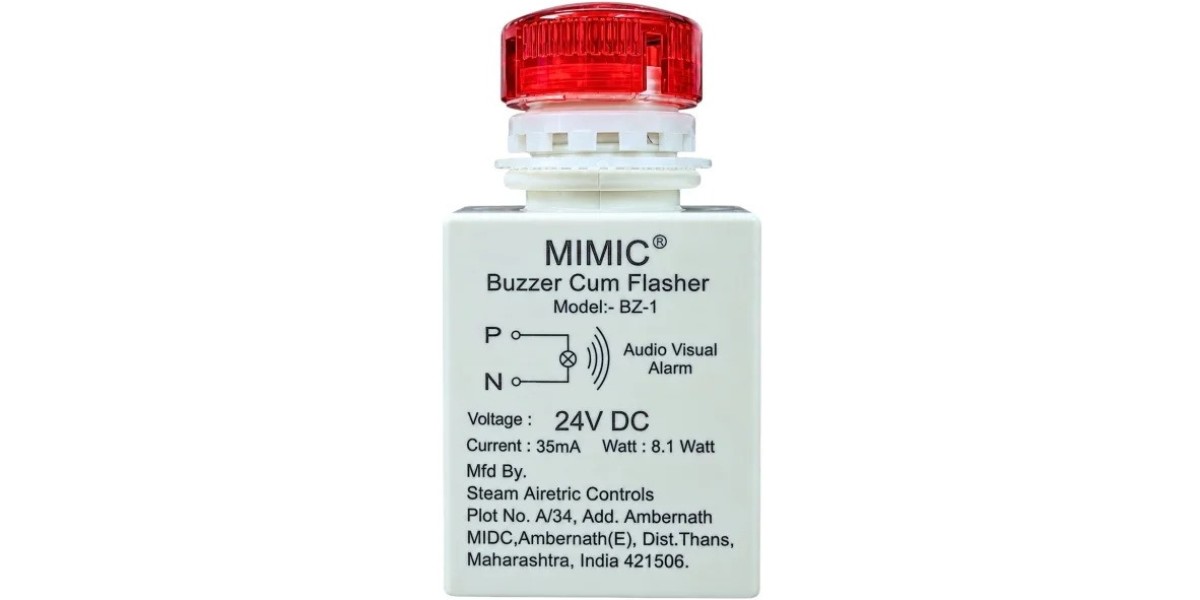
A combined buzzer-cum-flasher can be useful when sound and light are intended to operate together. It brings both functions into one assembly and may simplify the panel's front layout.
Separate buzzers and indicator lights may be more appropriate when the two signals need independent operation, different positions, or different control logic.
The choice depends on the intended warning behaviour, panel space, wiring design, and maintenance strategy.
Explore Mimic Products' Buzzer-Cum-Flasher Range
Mimic Products offers buzzer-cum-flasher devices for electrical switchgear and industrial signalling applications. Buyers can review the category to compare available options.
https://mimicproducts.in/product-category/electrical-switch-gear/buzzer-cum-flasher/
Before choosing a model, verify its individual operating voltage, mounting details, and other technical specifications against the panel requirements.
Final Checks Before Purchase
A simple selection checklist can help:
Define the warning condition and expected operator response.
Confirm the control circuit's AC or DC supply.
Check the sound and visual indication requirements.
Verify panel cut-out and installation depth.
Review the environmental conditions.
Confirm wiring and switching compatibility.
Check the manufacturer's instructions and product documentation.
Conclusion
Selecting an Audio visual alarm for an electrical panel requires a review of electrical, mechanical, and operating requirements. Voltage compatibility, sound output, light visibility, mounting dimensions, and environmental protection all influence the decision. Taking time to check these factors helps panel designers and buyers choose a device that fits the intended warning application.