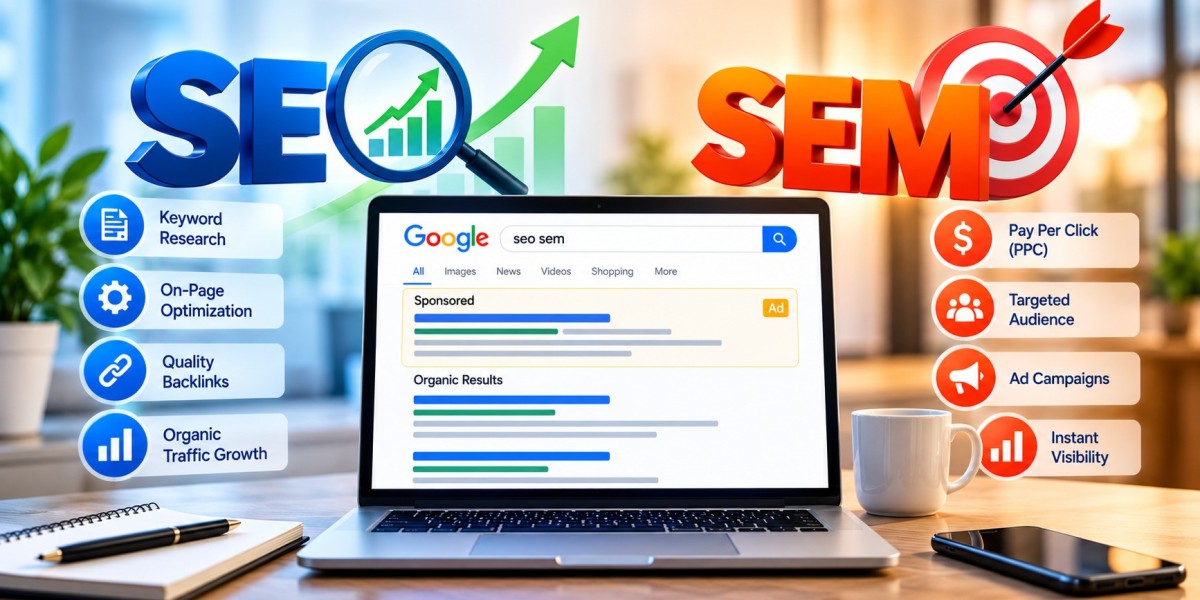

Every business wants its website to appear when potential customers search for products or services online. However, having a professional website is not enough to compete in today's digital marketplace. Companies need a clear strategy to reach their target audience and turn website visitors into customers. Understanding SEO SEM helps businesses recognize how organic search optimization and paid advertising contribute to online visibility. While SEO focuses on improving unpaid search rankings, SEM commonly refers to paid search campaigns designed to attract relevant visitors. Combining these approaches can help businesses develop a more balanced and effective digital marketing strategy.
Whether you manage an online store, operate a local business, or provide professional services, choosing the right search marketing approach can make a meaningful difference in your online performance.
What Is the Relationship Between SEO and SEM?
SEO and SEM are closely connected because both aim to help businesses become more visible on search engines such as Google and Bing.
SEO stands for Search Engine Optimization. It involves improving website content, technical performance, and overall quality to increase visibility in organic search results.
SEM stands for Search Engine Marketing. Although the term can broadly include different search marketing activities, it is commonly used today to describe paid search advertising.
The main difference is how businesses attract traffic.
SEO generates visits through organic search listings, while paid SEM campaigns generate traffic through sponsored advertisements.
Both methods help connect businesses with people searching for relevant information, products, and services.
How SEO Helps Businesses Build Organic Search Visibility
SEO focuses on improving a website so that search engines can understand its pages and show them for relevant searches.
An effective SEO strategy involves more than adding keywords to website content. It requires understanding search intent, improving the user experience, and maintaining a technically accessible website.
Keyword Research and Search Intent
Keyword research helps businesses identify the words and phrases customers use when searching online.
However, targeting keywords with high search volume is not always the best approach.
A keyword with lower search volume but strong commercial intent may attract visitors who are more likely to contact a business or make a purchase.
For example, someone searching for "website development services for small businesses" may have a clearer buying intention than someone searching for "what is a website."
Understanding these differences helps businesses create pages that match customer needs.
On-Page Website Optimization
On-page SEO involves improving individual website pages to make them more useful and understandable.
Important elements include:
Relevant page titles and meta descriptions
Clear H1, H2, and H3 headings
Natural keyword placement
Descriptive image alt text
Contextual internal linking
Helpful and original content
These improvements make pages easier for visitors to navigate while helping search engines interpret their purpose.
Technical Website Improvements
Technical SEO focuses on the systems and structures that support search engine crawling and indexing.
A technically optimized website should provide accessible navigation, mobile-friendly layouts, and efficient loading performance.
Businesses should also address broken links, incorrect redirects, duplicate URLs, and unnecessary indexing restrictions.
These issues can prevent important pages from performing as well as they otherwise might.
How SEM Generates Targeted Website Traffic
Paid search marketing allows businesses to display advertisements for selected searches.
Google Ads is one of the most widely used platforms for managing search advertising campaigns.
Businesses can create advertisements, select relevant keywords, define geographic targeting, and control their advertising budgets.
Reaching Customers at the Right Time
One major advantage of paid search is the ability to reach people who are actively searching for a product or service.
For example, a local plumbing company can target searches related to emergency plumbing services in its service area.
This approach helps businesses focus their advertising on customers who may already be looking for immediate assistance.
Creating Effective Search Advertisements
A successful advertisement should explain what the business offers and why someone should visit its website.
Clear headlines, relevant descriptions, and appropriate landing pages are essential.
Advertisements should also match the user's search intent.
If someone searches for a specific service, the advertisement should direct them to a page about that service rather than an unrelated homepage.
Managing Advertising Performance
Paid campaigns require regular monitoring to ensure advertising budgets are being used effectively.
Important performance indicators include click-through rate, cost per click, conversion rate, and cost per acquisition.
Analyzing this information helps advertisers identify which keywords, advertisements, and landing pages produce valuable results.
SEO vs SEM: Understanding the Key Differences
Although both methods improve search visibility, their processes and timelines differ.
Feature | SEO | SEM (Paid Search) |
|---|---|---|
Search placement | Organic results | Sponsored results |
Primary investment | Content and optimization | Advertising budget |
Traffic generation | Gradual development | Can begin after campaign activation |
Keyword targeting | Content and search intent | Advertising keywords and bids |
Long-term potential | Can generate ongoing traffic | Requires continued advertising |
Performance measurement | Organic traffic and conversions | Advertising costs and conversions |
Businesses should evaluate these differences before deciding how to distribute their marketing resources.
Neither method guarantees results, but each can serve a valuable purpose within a broader marketing strategy.
Why Combining SEO and SEM Can Improve Marketing Results
Using SEO and paid search together allows businesses to take advantage of the strengths of both approaches.
Instead of relying on only one method, companies can build a search marketing strategy that addresses immediate opportunities and long-term objectives.
Better Coverage Across Search Results
Organic listings and sponsored advertisements appear in different sections of search engine results pages.
When a business has relevant content and active paid campaigns, it may have opportunities to appear in both areas.
This can increase brand exposure for important searches.
More Useful Keyword Data
Paid advertising campaigns can reveal which search terms generate inquiries, sales, or other conversions.
Businesses can use this data to identify valuable topics for their SEO content strategies.
Similarly, organic search performance can provide insights that help improve paid keyword selection.
Improved Customer Journey
Not every customer is ready to buy during their first search.
Some begin by reading informational articles, comparing products, or researching solutions.
SEO content can help answer these early questions.
Paid search campaigns can focus on searches with stronger commercial intent, helping businesses reach potential customers closer to a purchase decision.
How to Develop an SEO SEM Strategy for Your Business
A successful search marketing plan should begin with clear goals and a realistic understanding of your audience.
Step 1: Define Your Marketing Objectives
Identify what you want your website to accomplish.
Your goals might include increasing online sales, generating consultation requests, attracting local customers, or improving brand recognition.
Measurable objectives make it easier to evaluate campaign performance.
Step 2: Research Your Target Audience
Understand who your ideal customers are and what problems they want to solve.
Consider their location, search behavior, and purchasing intentions.
This information helps determine which keywords and marketing messages are most relevant.
Step 3: Optimize Important Website Pages
Before investing heavily in advertising, ensure that your website provides a clear and reliable experience.
Review your homepage, service pages, product pages, and contact forms.
Visitors should be able to understand your offerings and take action without unnecessary confusion.
Step 4: Publish Helpful Content
Create articles and resources that answer common customer questions.
Focus on providing useful information instead of repeating keywords excessively.
A consistent content strategy can support organic search visibility and help demonstrate your business's expertise.
Step 5: Launch Focused Advertising Campaigns
Start paid campaigns with a carefully selected group of keywords that match your business objectives.
Use relevant advertisement copy and send visitors to appropriate landing pages.
Monitor costs and performance before expanding your campaigns.
Step 6: Review Results and Make Improvements
Search marketing requires ongoing evaluation.
Use platforms such as Google Analytics, Google Search Console, and Google Ads to review relevant performance metrics.
Identify successful pages, underperforming campaigns, and opportunities for better conversions.
Regular improvements help businesses make more informed decisions.
Common Mistakes That Reduce Search Marketing Performance
Businesses sometimes invest in SEO or paid advertising without developing a clear strategy.
One common mistake is targeting keywords that generate traffic but do not match the company's products or services.
Another is publishing low-quality content simply to increase the number of website pages.
Poor mobile usability, confusing navigation, and slow-loading pages can also discourage potential customers.
Paid advertising campaigns may waste money when businesses fail to track conversions or use appropriate keyword targeting.
Avoiding these mistakes helps create a more efficient marketing process.
How Local Businesses Can Benefit From SEO and SEM
Local companies often compete for customers within specific cities, neighborhoods, or service areas.
Local SEO helps businesses improve their visibility for searches related to their geographic location.
This may include optimizing a Google Business Profile, maintaining accurate business information, earning genuine customer reviews, and developing relevant location pages.
Paid search campaigns can complement these activities by targeting customers searching for services in particular areas.
For example, a home remodeling company might optimize its service pages for relevant local searches while using paid advertisements to promote specific renovation services.
Combining these methods can create additional opportunities to reach customers in the areas the business serves.
Measuring the Success of Your Search Marketing Efforts
Website traffic alone does not provide a complete picture of marketing success.
Businesses should also measure whether visitors take valuable actions.
Important metrics include organic search clicks, qualified leads, completed purchases, conversion rates, and customer acquisition costs.
For paid campaigns, return on advertising spend can help evaluate revenue generated relative to advertising expenditure.
SEO performance may be evaluated through organic conversions, search visibility, and the value of acquired customers.
By focusing on meaningful business outcomes, companies can make better decisions about future investments.
Frequently Asked Questions About SEO and SEM
Is SEO better than SEM for long-term growth?
SEO is often valuable for long-term organic visibility because optimized pages may continue attracting traffic over time. However, paid search can also contribute to sustained business growth when campaigns remain profitable.
Can small businesses use SEO and SEM together?
Yes. Small businesses can combine organic optimization with carefully targeted paid advertisements. The appropriate balance depends on their budget, competition, and marketing goals.
How long does SEO take to show results?
SEO timelines vary depending on website condition, competition, content quality, and many other factors. Some improvements may be noticed relatively quickly, while competitive searches can require several months or longer.
Does SEM improve organic Google rankings?
Paying for search advertisements does not directly improve a website's organic rankings. However, paid campaign data may provide useful insights for SEO planning.
What is the biggest advantage of combining both strategies?
Combining SEO and paid search helps businesses pursue organic visibility while also targeting relevant searches through advertising. This creates a more flexible approach to reaching potential customers.
Conclusion
SEO and SEM play important roles in helping businesses compete in search results and attract potential customers. SEO supports organic growth through relevant content, technical optimization, and website improvements, while paid search marketing creates opportunities for faster, targeted visibility.
Businesses that understand how these methods work can make better decisions about their marketing budgets and long-term goals.
By investing in useful content, well-optimized website pages, relevant advertising campaigns, and regular performance analysis, companies can build a stronger online presence and create more opportunities to generate qualified leads and sales.








