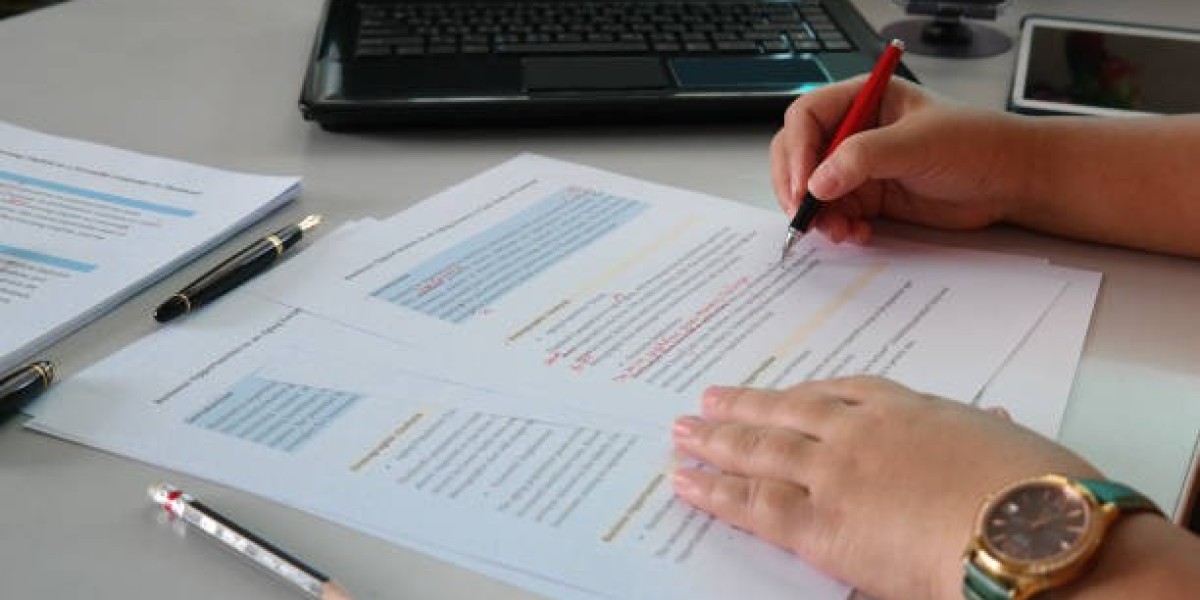

Essay editing is about making your work clearer, more convincing and easier to read without losing your original ideas. A good edit checks more than spelling and grammar: it also looks at your argument, paragraph structure, use of evidence and referencing. If you leave enough time to review your work in stages, you are more likely to catch problems that a quick read-through would miss.
What Is Essay Editing?
Essay editing is the process of reviewing a draft and making changes to improve its quality. This might mean rewriting an awkward sentence, moving a paragraph, removing repeated points or explaining an argument more clearly.
When you have spent hours researching and writing an assignment, it can be difficult to spot problems in your own work. You know what you meant to say, so your mind sometimes fills in the gaps when you read it back. Editing gives you a chance to step away from the writing and look at it from your reader's perspective.
For university students in the UK, this is particularly important. An essay may contain plenty of research but still fall short if the argument is difficult to follow or the evidence is not properly explained.
Good essay editing usually covers five areas:
- Structure: Does the introduction lead naturally into the main discussion, and does the conclusion answer the question?
- Argument and evidence: Are your points relevant, well supported and logically connected?
- Academic language: Is your writing clear, precise and appropriate for your subject?
- Grammar and punctuation: Have you corrected errors that could distract the reader?
- Referencing: Are your citations accurate and consistent with your university's requirements?
Editing and proofreading are related, but they serve slightly different purposes. Editing deals with the overall quality of the writing, while proofreading usually focuses on smaller errors in the final version.
How to Edit an Essay Step by Step
1. Read the essay question again
Before you change anything, return to the original assignment brief. It is surprisingly easy to drift away from the question when you have spent a long time researching a topic.
Pay attention to the instruction word. For example, analyse asks you to examine something in detail, while evaluate requires you to assess its strengths, weaknesses or significance and reach a reasoned judgement.
Imagine you have been asked to evaluate the effects of remote working on employee productivity. An essay that simply lists the advantages and disadvantages may not go far enough. You would need to weigh up the evidence, consider different circumstances and explain what the findings suggest overall.
Ask yourself:
- Have I answered every part of the question?
- Is my main argument clear from the introduction?
- Does every section contribute something useful?
- Have I spent too much time describing the topic instead of analysing it?
If a paragraph does not help answer the question, consider whether it needs to be shortened, moved or removed. This is often more useful than spending time polishing sentences that do not belong in the essay.
2. Check the structure and flow
Once you are happy that the content is relevant, look at how the ideas fit together.
Your introduction should establish the topic, provide enough background for the reader to understand it and introduce the main argument. You do not need to explain every detail at this stage. Give the reader a clear idea of what the essay will discuss and why.
The main body should develop your argument in a sensible order. Each paragraph needs a clear purpose, and the reader should be able to understand how it connects to the previous point.
A useful paragraph structure is:
- Introduce the main point.
- Provide evidence, an example or a relevant source.
- Explain what the evidence means.
- Connect the discussion to your overall argument.
You do not have to follow this pattern mechanically, but it helps identify paragraphs that contain evidence without enough explanation.
For example, a paragraph about rising university accommodation costs might include a statistic about rent. Simply reporting the figure is not enough. You should explain how the cost affects students and why that matters to the question you are discussing.
Your conclusion should bring the argument together and answer the original question. Avoid introducing a major new point at the last minute.
One quick technique is to read only the first sentence of each paragraph. If the essay seems disjointed, you may need to rearrange the discussion or make the links between ideas clearer.
3. Strengthen your argument and use of evidence
A well-written essay needs more than accurate grammar. Your claims must make sense, your sources must be relevant and your reasoning must stand up to scrutiny.
During editing, look for statements that sound convincing but have little evidence behind them. Words such as everyone, always, never and proves can make a claim stronger than the research justifies.
Consider this example:
Original: Social media has a negative effect on students because they spend too much time online.
Edited: Excessive social media use may interfere with students' study routines, although the effect can depend on how they use these platforms and the circumstances in which they study.
The revised sentence is more cautious and specific. However, it still needs credible evidence in an academic essay. Editing should improve the accuracy of your claims, not simply make them sound more sophisticated.
Check whether your sources support the points you have attached to them. If you are discussing a research study, make sure you have understood its findings, limitations and context rather than relying on a headline or a brief summary.
It is also worth looking for counterarguments. If reliable evidence challenges your position, acknowledge it and explain why your overall conclusion remains reasonable, or adjust your argument if the evidence warrants it.
The aim is not to make every paragraph agree with your original opinion. It is to present a reasoned argument that reflects the evidence.
4. Improve clarity and academic language
You do not need complicated sentences or obscure vocabulary to sound academic. In most cases, clear and direct writing makes your argument easier to understand.
Start by looking for sentences that contain several ideas. If a sentence takes two or three attempts to understand, try splitting it into shorter parts.
For example:
Before: It is important to note that there are a number of different factors that can potentially have an impact on student performance.
After: Several factors can affect student performance.
The second version is shorter but keeps the main point. There is no need to add extra words simply to make a sentence sound formal.
Watch out for repeated expressions, vague phrases and unnecessary introductions. Words such as very, really and quite are not always wrong, but they can weaken a sentence when a more precise description would work better.
For example, instead of writing that a result was very important, explain why it mattered. Did it change the interpretation of the findings? Did it reveal a gap in previous research? Specific explanations are more useful than general emphasis.
You should also check that technical terms are used correctly. A simpler word is not always better if it changes the meaning, particularly in subjects such as law, economics, psychology or medicine.
If a passage feels awkward, read it aloud. You may notice missing words, clumsy transitions or sentences that are much longer than they need to be.
5. Check grammar, spelling and punctuation
Once the structure and argument are in good shape, turn your attention to language accuracy.
Common errors include subject–verb agreement, inconsistent verb tenses, misplaced apostrophes, comma splices and missing punctuation. These mistakes can make otherwise strong work harder to follow.
For example:
- Incorrect: The results shows a significant difference.
- Correct: The results show a significant difference.
Or:
- Incorrect: The students revised it's conclusion.
- Correct: The students revised its conclusion.
Spellcheckers can catch many errors, but they will not identify every problem. A word can be spelled correctly and still be wrong in context. Confusing their with there, for example, requires more than a basic spelling check.
For a UK university assignment, check your use of British English. Words such as organisation, analyse and centre are common UK spellings. However, follow the required style guide and preserve the original spelling in quotations, official titles and source names where appropriate.
Consistency matters. Avoid switching between different spelling conventions without a good reason.
A practical approach is to check one type of error at a time. On one pass, focus on punctuation. On the next, look for spelling mistakes and awkward sentences. This makes the task more manageable than trying to spot everything at once.
6. Review citations and references
Referencing is easy to overlook when you are concentrating on the quality of your writing, but it deserves a separate check.
Start by comparing your in-text citations with your reference list. Make sure the names, dates and publication details match the original sources. Check quotations against the source material and include page numbers where your required referencing style calls for them.
UK universities do not all use the same referencing system. Your department may require Harvard, APA, OSCOLA or another style, and individual institutions may have their own variations.
For legal essays, for example, OSCOLA may be required for cases and legislation. In other subjects, your course may specify a version of Harvard referencing.
Do not assume that a reference is correct just because it looks familiar. Check your university's guidance and verify the details against the original publication.
You should also check that every citation supports the statement it accompanies. A reference can be perfectly formatted and still be unsuitable if the source does not establish the point you are making.
If you have moved or deleted paragraphs during editing, revisit the references afterwards. It is easy to leave behind a citation that no longer belongs in the discussion.
7. Leave time for proofreading
One of the most useful essay editing habits is to avoid doing everything in a single sitting.
When possible, leave your draft for a few hours or overnight before reviewing it. Returning with fresh eyes can help you notice problems that seemed invisible while you were writing.
If your deadline is approaching, take a short break and change the way you review the document. Reading a printed copy or changing the view on your screen may help you notice repeated words, missing punctuation and awkward formatting.
During your final read-through, check:
- The essay title and assignment details.
- The required word count.
- Headings, page numbers and paragraph spacing.
- Tables, figures and captions, where applicable.
- Citations and the reference list.
- Any required declaration about AI use or other assistance.
- The file format and submission instructions.
Do not make major changes simply for the sake of making them. If you change an argument or rewrite a paragraph at the last minute, check that the new version still makes sense and that the references remain accurate.
Essay Editing Tips for Better Results
Use editing tools sensibly
Grammar checkers and word processors can help identify spelling mistakes, repeated words and potentially unclear sentences. They are useful starting points, but they cannot reliably judge every argument or verify every academic source.
Treat suggestions as possibilities rather than instructions. A tool may recommend a change that alters your intended meaning or removes an important qualification.
If you use AI to help with editing, check your university's academic integrity and AI-use policies first. Rules differ between institutions and assessments. Do not upload confidential research data, identifiable participant information or unpublished material to an external tool without checking the relevant privacy and research requirements.
Keep your own voice
Editing should make your ideas easier to understand, not turn your essay into something that no longer sounds like you.
You may come across suggestions that replace simple wording with more elaborate expressions. Resist the temptation to accept every change. If your original sentence is accurate and clear, it may not need changing.
The same applies when receiving feedback from another person. Use comments to identify areas for improvement, but make sure you understand and approve the changes you incorporate.
For assessed work, the distinction between correcting language and rewriting someone else's academic argument is important. Check what your university permits before accepting outside assistance.
Use feedback to improve future essays
If a tutor has commented on previous assignments, use those comments as a personal editing checklist.
For example, if you regularly receive feedback that your work is too descriptive, spend more time explaining the significance of evidence and comparing different viewpoints. If your references are inconsistent, check them earlier rather than leaving the entire task until the final few minutes.
This approach helps you improve your writing habits over time instead of correcting the same problems in every assignment.
Should You Use an Essay Editing Service?
Editing your own work can be challenging, especially when you are working to a deadline or struggling to identify problems in a familiar draft. Additional support may be useful in some circumstances, but you should check what is permitted before choosing a service.
If you are considering an Essay Editing Service, start by finding out exactly what it offers. Does it focus on grammar, clarity and presentation, or does it rewrite arguments and add substantive content? The distinction matters when you are submitting assessed work.
Before paying for assistance, consider the following:
Scope of the service: Make sure the proposed work matches what your university permits. Do not assume that proofreading and extensive rewriting are treated in the same way.
Fees and turnaround: Check the total cost, what is included and whether the stated deadline is realistic. Be cautious about promises of guaranteed grades.
Privacy: Read the service's privacy policy and check how your essay, personal details and research material will be handled.
Academic integrity: Consult your institution's current rules on proofreading, external editing and AI use before sharing your work.
University policies can differ considerably. The University of Leeds, for example, provides guidance on proofreading and restrictions on paid proofreading services for student work. Swansea University also publishes a policy covering proofreading written submissions. These examples should not be treated as universal UK rules; your own institution's policy is the one you need to follow.
You can read the University of Leeds proofreading guidance and Swansea University's proofreading policy for examples of how requirements can vary.
If external editing is not permitted, you still have options. Your university's academic skills team, library, writing centre or tutor may be able to help you develop your editing skills within the rules.
The goal is to strengthen your own writing while keeping responsibility for your ideas, research and final submission.
Final Essay Editing Checklist
Before submitting your assignment, use this checklist to make sure you have covered the main points.
- I have answered the question and followed the assignment brief.
- My introduction establishes a clear argument.
- My paragraphs follow a logical order.
- My claims are supported by relevant evidence.
- I have explained why the evidence matters.
- I have removed unnecessary repetition and unclear wording.
- I have checked grammar, spelling and punctuation.
- My use of British English is consistent.
- My citations and references follow the required style.
- My word count and formatting meet the assessment requirements.
- I have followed my university's rules on editing tools and outside assistance.
- I have checked the final file and submission instructions.
You do not need to make every sentence sound perfect. Focus on making the essay accurate, coherent and easy to follow. A clear argument supported by relevant evidence will serve you better than complicated language that obscures what you are trying to say.
Frequently Asked Questions
What is the difference between essay editing and proofreading?
Essay editing focuses on improving the argument, structure, clarity and language. Proofreading is generally the final review for spelling, grammar, punctuation and presentation errors. Both can be useful, but editing usually involves broader changes.
How many times should I edit an essay?
There is no fixed number. For most assignments, it is useful to make three focused passes: one for structure and argument, one for clarity and language, and one for proofreading and references. A longer essay may need more attention, especially if you make substantial changes.
Can I use AI to edit my university essay?
That depends on your university's rules and the requirements of your assessment. Some forms of assistance may be permitted, while others may be restricted. Check the applicable policy, verify suggestions yourself and make sure the final submission reflects your own work.
Can essay editing improve my grade?
Editing can help you present your ideas more clearly, correct avoidable mistakes and meet the assessment requirements. However, it cannot guarantee a higher mark. Your grade will depend on the marking criteria, the strength of your argument, the quality of your evidence and how well you answer the question.
Should I edit my essay before checking references?
It is sensible to review references throughout the process, then carry out a dedicated final check after making structural changes. This helps ensure that your citations remain accurate and that every reference supports the relevant discussion.
What is the best way to edit an essay quickly?
Start with the assignment question and the overall argument. Correct major structural problems first, then review unclear sentences and obvious language errors. Finish by checking references, formatting and submission requirements. Working in this order helps you use limited time where it is most valuable.