
Introduction
Altus Airflow supports healthcare facilities in developing modular cardiac operation theatres with coordinated infrastructure, specialized installations, and reliable technical systems. A Modular Cardiac OT Engineering Company may provide electrical design, power distribution planning, lighting integration, emergency power coordination, equipment connections, grounding, safety testing, and commissioning support. These services help hospitals establish an electrical infrastructure suited to the requirements of cardiac surgical environments. Careful engineering is essential because operating theatres depend on reliable power for lighting, monitoring, anaesthesia systems, and other critical equipment. Proper planning, qualified installation, and documented verification also support ongoing maintenance and compliance with applicable healthcare and electrical safety standards.
1. Electrical Site Assessment and Requirement Analysis
Electrical engineering begins with a detailed assessment of the existing hospital infrastructure or the proposed theatre location. The engineering team reviews available power supplies, distribution boards, cable routes, equipment loads, earthing arrangements, and the condition of existing electrical installations.
For renovation projects, this assessment helps identify outdated wiring, insufficient circuit capacity, unsuitable connections, and infrastructure that may require upgrading. For new installations, it establishes the technical requirements for designing an electrical system that supports the planned operation theatre.
The team also consults hospital administrators, biomedical engineers, facilities managers, and clinical representatives to understand the equipment expected to operate in the theatre. This information helps establish electrical load estimates and identify systems that require dedicated circuits or backup arrangements.
The findings are documented and used to prepare the initial engineering design. Early assessment reduces the risk of installation conflicts and helps the hospital plan procurement, construction, and commissioning more effectively.
2. Electrical Load Calculation and Power Distribution Design
Cardiac operation theatres may contain surgical lights, operating tables, anaesthesia equipment, patient monitoring systems, imaging devices, computers, and environmental control equipment. Each device has specific electrical requirements that must be considered during design.
Electrical load calculations help determine the expected demand, circuit allocation, distribution capacity, and appropriate protective devices. The design should consider normal operating loads, relevant starting currents, future equipment requirements, and the consequences of a power interruption.
A well-organized distribution system assigns equipment to suitable circuits and identifies the electrical panels serving different loads. Clear circuit identification also simplifies inspection, troubleshooting, and maintenance.
The engineering design should follow applicable electrical codes, healthcare facility standards, equipment manufacturer instructions, and project specifications. Where required, qualified professionals should assess the need for dedicated supplies or specialized protective arrangements.
A Modular Cardiac OT Engineering Company can coordinate these calculations with the theatre layout and equipment schedule so that power outlets, cable routes, and distribution panels are positioned appropriately.
3. Essential Power and Backup Supply Planning
Power continuity is an important consideration in cardiac surgical environments. An unexpected interruption may affect equipment availability and require staff to follow established emergency procedures.
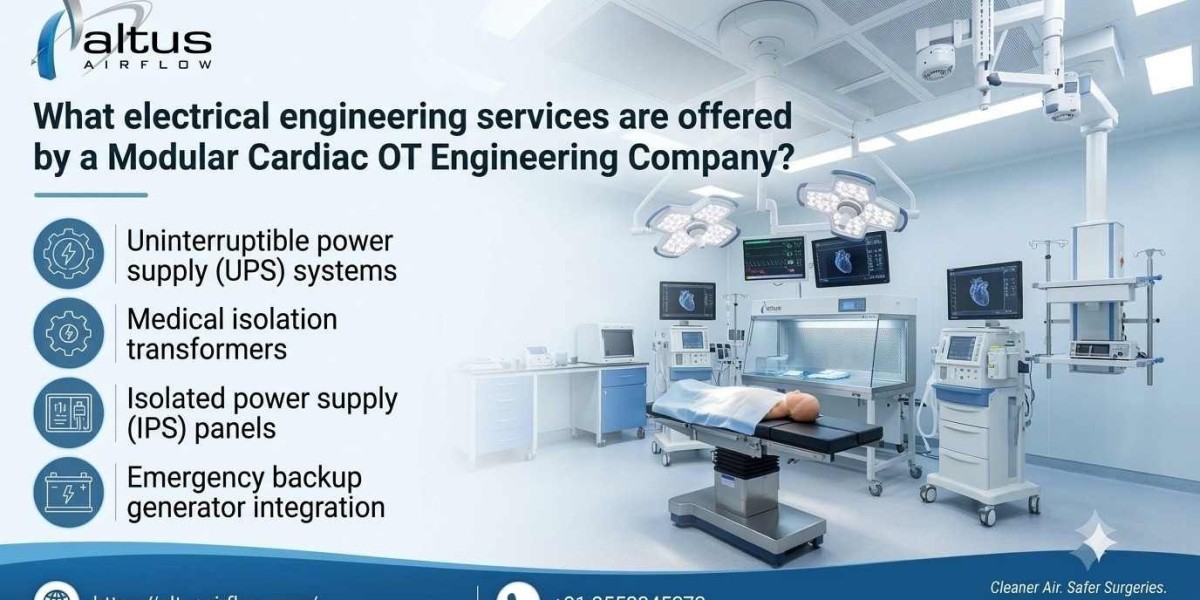
Electrical engineering services may include planning for essential electrical supplies, emergency power connections, uninterruptible power supplies (UPS), and integration with the hospital's standby generator system.
The design should identify which loads require backup power and determine the appropriate capacity and expected operating duration. These decisions should be based on equipment requirements, risk assessments, applicable standards, and hospital emergency planning.
UPS systems may provide temporary power to selected devices while a standby generator starts or during short interruptions. However, a UPS is not a substitute for a properly designed emergency power strategy. Its capacity, battery condition, transfer arrangements, and maintenance requirements must be assessed.
The engineering team should also coordinate testing of transfer systems and backup equipment. Records should show the tests performed, results obtained, defects identified, and corrective actions completed.
Hospitals should maintain clear procedures for power failures, including communication responsibilities and approved responses for affected equipment.
4. Surgical Lighting and General Lighting Integration
Lighting design must support the practical requirements of surgical teams while coordinating with the theatre's ceiling arrangement and other installed systems.
Electrical engineering services may include power connections and control arrangements for surgical lights, general room lighting, examination lights, and selected task lighting. The location of surgical lights should be coordinated with the operating table, ceiling supports, ventilation outlets, and medical equipment.
The design team should confirm the electrical specifications, mounting requirements, control interfaces, and access needed for maintenance. Ceiling coordination is particularly important because surgical lights may share limited space with equipment pendants, monitors, and ventilation components.
Lighting controls should be positioned so authorized staff can operate them conveniently. The design may also include appropriate lighting for preparation areas, access routes, and supporting spaces, depending on the project scope.
After installation, qualified personnel should check electrical connections, control functions, and the operation of the installed lights. Any required electrical safety tests should be completed and documented.
Correct integration supports reliable operation and helps avoid costly alterations after the modular ceiling and other theatre components have been installed.
5. Earthing, Bonding, and Electrical Protection
Earthing, bonding, and protective devices are essential elements of electrical safety. Their design must account for the intended healthcare environment, connected equipment, and applicable electrical requirements.
The engineering team should evaluate the earthing arrangement and determine the appropriate protective measures for the installation. This may include reviewing protective conductors, equipotential bonding where required, circuit protection, and coordination with the hospital's wider electrical system.
The exact requirements depend on the applicable codes and standards, the room classification, and the equipment being installed. Specialized medical locations may have additional requirements that should be assessed by qualified electrical professionals.
Protective devices must be selected and coordinated according to the system design. Incorrect selection can affect fault protection, equipment availability, or the safe operation of electrical circuits.
Testing may include verification of protective conductor continuity, insulation resistance where appropriate, and other checks required by the governing standards and design specifications.
Test results should be recorded and reviewed before the electrical installation is accepted. Any defects must be corrected and verified through the appropriate testing process.
6. Dedicated Circuits and Medical Equipment Connections
Medical equipment may have different power requirements, plug configurations, connection arrangements, and manufacturer-specific installation instructions. These differences must be considered when designing the theatre's electrical infrastructure.
Electrical engineering services can include dedicated circuits for selected equipment, appropriately positioned outlets, cable management, and coordination with biomedical engineering teams.
Equipment schedules should identify the required voltage, current, connection type, and any special installation conditions. The team should also consider equipment placement, access for servicing, and the need to keep cables from obstructing staff movement.
Before connecting a device, the installation team should verify that the available supply matches the equipment specifications. Electrical connections should be completed by qualified personnel and inspected according to the relevant requirements.
Where devices connect to hospital information systems or other digital equipment, the project team should coordinate power, data, and equipment integration requirements. Electrical and data infrastructure should be planned together without confusing their separate safety and performance requirements.
Equipment acceptance records should identify the installed device, relevant checks, and any outstanding issues. This supports maintenance and helps the hospital trace electrical problems if they occur later.
7. Electrical Integration with HVAC and Modular Systems
A cardiac operation theatre's electrical infrastructure must work alongside ventilation systems, modular walls, ceiling panels, doors, and other building services.
HVAC equipment may require dedicated electrical supplies for air-handling units, fans, controls, sensors, and monitoring devices. The engineering team should coordinate these loads with the main distribution design and the mechanical system specifications.
Control panels and monitoring devices need suitable power connections and accessible installation locations. Cable routes should be coordinated with ductwork, structural supports, and ceiling-mounted equipment to prevent clashes and preserve access for maintenance.
Modular construction adds another coordination requirement: electrical outlets, switches, panels, and service penetrations must align with the approved wall and ceiling design. Changes made after panel fabrication can create delays or require costly rework.
The team should therefore finalize equipment schedules, electrical layouts, and relevant service drawings before installation begins. Any later modifications should follow the approved change-control process.
A Modular Cardiac OT Engineering Company can help coordinate these interfaces within its contracted scope, reducing conflicts between electrical installations and other theatre systems.
8. Control Panels, Monitoring, and Alarm Integration
Modern operating theatres may use electrical control panels and monitoring systems to support the management of selected building services. Depending on the design, these may include power status indicators, environmental monitoring interfaces, and alarms for specified system conditions.
Electrical engineering services may cover the supply, installation, and connection of these components, as well as coordination with the relevant mechanical, biomedical, or information technology teams.
The design should define which parameters are monitored, where information is displayed, who receives alerts, and what actions are expected when an abnormal condition occurs.
Critical alarms should be configured and tested according to the approved specifications. Staff should receive instructions on how to interpret alerts and follow the relevant escalation procedures.
Where digital connectivity is involved, the hospital should assess network access, cybersecurity, data permissions, and the reliability of communication links. These requirements should be coordinated with the hospital's IT and biomedical engineering teams.
Commissioning records should document the tests performed and confirm that the relevant connections and alarm functions operate as intended. Monitoring systems should also be included in ongoing maintenance and verification schedules.
9. Electrical Safety Testing and Commissioning
Electrical installation should not be accepted solely because the equipment has been connected and appears to operate normally. Appropriate testing is required to verify that the system meets the approved design and applicable safety requirements.
The commissioning plan should identify the tests, responsible personnel, acceptance criteria, and records required for each relevant circuit or system.
Depending on the installation, checks may include:
- Verification of electrical connections and circuit identification.
- Protective conductor continuity and earthing checks.
- Insulation resistance testing where appropriate.
- Functional checks of switches, controls, and protective devices.
- Verification of essential power and backup arrangements.
- Testing of relevant alarms and monitoring interfaces.
- Equipment-specific electrical safety checks.
Testing should be conducted by qualified personnel using suitable instruments and methods. Results should be documented and compared with the relevant acceptance criteria.
If a test identifies a problem, the responsible team should investigate the cause, complete corrective work, and repeat the necessary tests. The affected system should not be accepted until outstanding safety-related issues have been resolved.
Commissioning documentation provides a reference for future inspections and helps the hospital demonstrate that the installation was checked before being placed into service.
10. Documentation, Compliance, and Handover
Accurate electrical documentation supports maintenance, troubleshooting, renovation planning, and hospital quality management.
The handover package should include relevant electrical drawings, distribution schedules, equipment connection details, test reports, equipment manuals, warranty information, and maintenance instructions. Documents should reflect the installation as completed, including approved changes made during construction.
Circuit schedules and panel labels should be clear and consistent with the final drawings. This helps maintenance teams identify the correct circuits and reduces confusion during inspection or repair.
The hospital should also receive information about recommended inspections, backup power testing, protective device checks, and other maintenance activities required by the design and applicable standards.
Electrical safety documentation should be reviewed by the responsible professionals and retained according to hospital policy and legal requirements. Missing or outdated records should be corrected through a documented process.
A Modular Cardiac OT Engineering Company can coordinate the electrical documentation associated with its project scope, while the hospital remains responsible for maintaining the records and ensuring that ongoing operations meet applicable requirements.
11. Preventive Maintenance and Long-Term Reliability
Electrical engineering responsibilities continue after installation. Preventive maintenance helps identify deterioration, faulty connections, battery problems, and other issues before they cause unexpected interruptions.
Hospitals should establish maintenance schedules based on equipment manufacturer recommendations, risk assessments, applicable standards, and operational needs.
Activities may include inspecting distribution boards, checking electrical connections where appropriate, testing backup systems, reviewing UPS battery condition, verifying selected protective devices, and investigating recurring faults.
Maintenance should be carried out by qualified personnel using approved procedures. Records should include the work completed, observations, test results, defects, and corrective actions.
Hospitals should also review the electrical load when new medical equipment is introduced. Adding devices without reassessing circuit capacity and distribution arrangements can create avoidable risks and reduce system reliability.
Periodic reviews of electrical drawings, asset registers, and maintenance records help keep documentation accurate as the theatre changes. A structured maintenance programme supports dependable operation and helps the facility plan repairs and upgrades more effectively.
Conclusion
Electrical engineering services are fundamental to the safe and reliable operation of a modular cardiac theatre. Site assessments, load calculations, power distribution, backup supply planning, lighting integration, protective measures, equipment connections, testing, and documentation all contribute to a coordinated installation. Each element should be designed and verified by qualified professionals according to the applicable healthcare and electrical requirements.
Altus Airflow supports healthcare facilities in coordinating modular operation theatre infrastructure and related technical installations. By working with Altus Airflow, hospitals can plan electrical interfaces, organize project documentation, and establish a practical foundation for commissioning, maintenance, and future infrastructure upgrades.
Frequently Asked Questions
1. What electrical services does a Modular Cardiac OT Engineering Company offer?
A Modular Cardiac OT Engineering Company may provide electrical design, load calculations, power distribution, backup power coordination, surgical lighting integration, equipment connections, safety testing, and commissioning support.
2. Why is backup power important in a cardiac OT?
Backup power can help maintain supplies to selected critical systems during interruptions, according to the hospital's approved electrical and emergency power design.
3. Are electrical safety tests required before commissioning?
Yes. Applicable electrical safety and functional tests should be completed and documented before the installation is accepted for use.
4. Does electrical engineering include surgical light installation?
It may include power connections, controls, and coordination of surgical lights with the ceiling and other theatre systems, depending on the project scope.
5. Who should maintain the cardiac OT electrical system?
Qualified hospital engineering personnel or authorized service providers should perform maintenance according to manufacturer instructions and applicable requirements.
Read Our Previous Blog ---------------> How do Modular IVF Labs Manufacturers ensure regulatory compliance?