
Roofing is one of the most dangerous jobs in America. 48.7 out of 100,000 full-time roofers died on the job site in 2024. This is nearly 15 times the risk that we see across all other jobs, making it the 3rd most dangerous occupation in terms of fatalities tracked by the government (just behind logging and commercial fishing) (BLS, Census of Fatal Occupational Injuries, 2024).
This one number changes what a roofing estimate has to cover. Some estimates just look at square footage. They treat safety like a small extra. But that is not the real job. The real job is much more dangerous than that. Roofing estimating has to show that danger. It should not hide it.
What Does Roofing Estimating Need To Calculate Before Pricing Even Starts?
First, it needs the real size of the roof. Not the size of the building under it. A roof is almost always bigger than the floor plan. This is because of the pitch. The pitch is how steep the roof is. The steeper the roof, the bigger this gap gets.
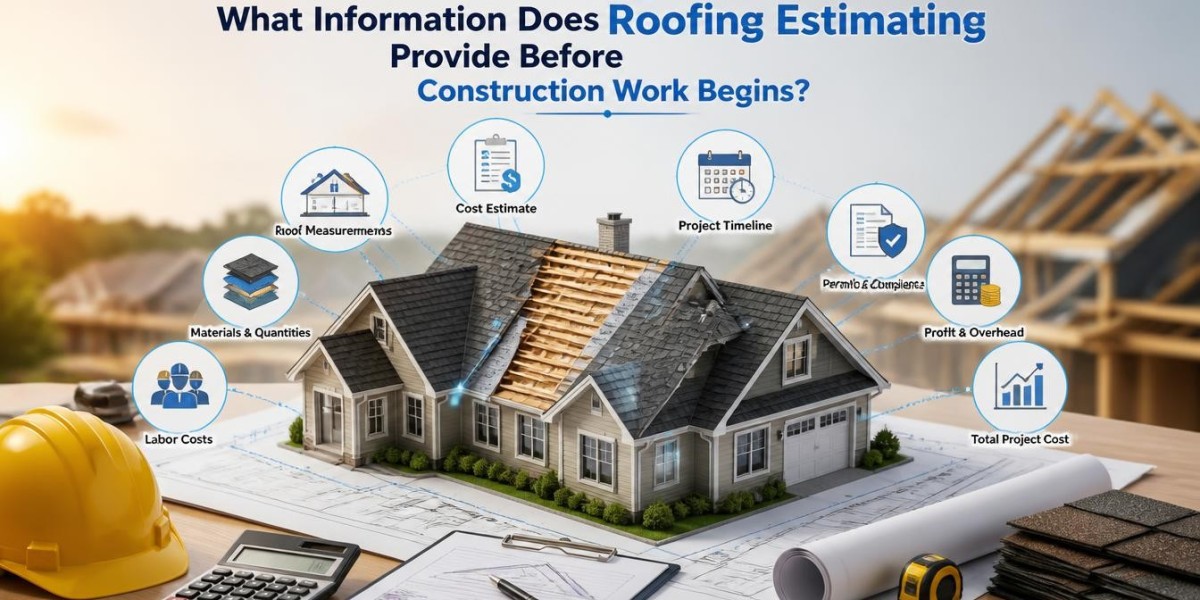
A full roofing estimating services process has to check:
Total roof area, adjusted for pitch. Not assumed from the footprint.
Length of every ridge, hip, valley, and eave. These numbers matter a lot. Flashing and trim prices greatly depend on them.
Number of roof penetrations. This means vents, skylights, and chimneys. Each one adds extra flashing material. Each one also adds extra labor time.
Number of old roof layers that need to come off. Tear-off cost changes significantly. Disposal weight also changes a lot. Both depend on the material and the number of layers.
Skipping any of these steps can make the final number look exact and accurate, but It may not match the actual roof.
Why Does A 48.7-Per-100,000 Fatality Rate Belong In A Roofing Estimation?
Because safety gear is not optional on this type of dangerous job. Fall protection adds real costs to a roofing project. This may include harnesses, safety equipment, and other safety-related systems. Additionally, crew training can be time-consuming and expensive, so these costs have to be estimated from the start
Roofers held about 166,900 jobs across the country in 2025. The median roofer made $55,440 that year. Roofing jobs are expected to grow by 5% by 2035. That is faster than most other jobs. The country will require more trained, safety-ready roofing crews, not fewer (BLS, Occupational Outlook Handbook: Roofers).
BLS Data on Roofing (2024–2025) | Figure |
Roofer fatal injury rate, 2024 | 48.7 per 100,000 FTE |
All-occupations fatal injury rate, comparison | 3.3 per 100,000 FTE |
Roofer rank among civilian occupations by fatality rate | 3rd highest |
Median annual roofer wage, May 2025 | $55,440 |
Projected employment growth, 2025–2035 | 5% |
Roofing cost estimation that leaves out fall protection, harness gear, and safety training is taking a risk. It assumes the crew will somehow cover these costs. These costs for a high-risk job must be evaluated and included in the final price prior to sending out the bid, not after starting the work.
How Should Budget Planning Account For Weather And Scheduling Risk?
The roofing budget planning should leave some room for weather delays. Roofing is more affected by weather than many other trades. A framing crew may still work during light rain, but a roofing crew usually cannot. Most roofing materials should not be installed on a wet or icy roof. This poses a weather risk that few other types of work have to contend with. If the schedule is tight, any weather delay could cause serious problems with the roofing schedule. That delay can then affect every trade scheduled to work after the roof is complete.
What Material Factors Change A Roofing Estimate The Most?
The type of material matters more than almost anything else. The price gap between roofing systems is huge. Each system also needs different skills. Each system needs a different amount of labor time too.
A basic asphalt shingle roof and a standing-seam metal roof are not two variations of a single roofing job. They are two separate jobs that require different crews, timelines, and costs throughout the process.
A roofing estimate also has to take into account:
Underlayment type and local code rules. These rules change by climate zone and by city.
Ventilation requirements. Bad ventilation can cancel a manufacturer's warranty. This happens even when the install itself was done well.
Local wind-uplift rules. These rules change how the roof gets fastened down. That changes labor time.
Cost to haul away old roofing material. This cost depends on weight. It changes a lot between asphalt and heavier material like tile or slate.
How Does This Tie Into Broader Cost Planning?
A roof is typically one of the highest single costs on a home or small commercial job. It is also one of the most dangerous parts of that job. SMA Estimating LLC treats roofing as its own job. It gets its own safety review. It gets its own material review. It rarely blends into a general price per square foot for the whole job.
This separation also matters for construction cost planning. A project owner reading a full budget needs to know why the roofing number is what it is. Not just the square footage. Not just the material grade. The safety gear needed to legally put a crew on a steep roof matters too. If fall protection costs are hidden inside a general labor rate, clients cannot see what they are actually paying for.
What Should A Complete Roofing Estimate Deliver Before Work Begins?
A clear breakdown. One that splits material, labor, safety cost, and disposal cost into their own categories. These figures should be verified against current suppliers' prices and should reflect the actual pitch, profile, and material of the roof.
A roofing estimating process built this way gives the owner something real to check, line by line. Not just one total that happens to feel about right.
Conclusion
Roofing is one of the most dangerous trades in American construction. That danger comes with real costs. A simple square-footage number will never show those costs. Before work begins, full roofing estimating needs to answer more than "how much material and labor." It needs to answer how the crew stays safe doing one of the most dangerous jobs the government tracks. SMA Estimating LLC builds this safety and material detail into every roofing estimate. Consequently, the final estimate matches the real project scope, the risk, and the real cost.