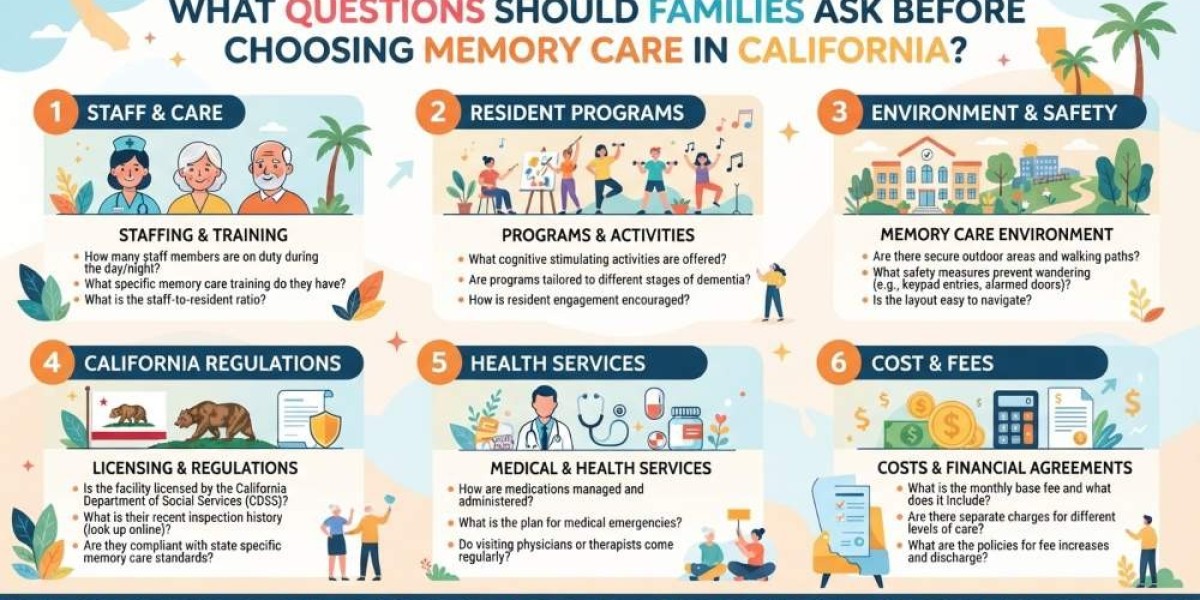

Choosing a memory care community for a loved one is a significant decision. Families want to find a place where their loved one can receive appropriate assistance, feel comfortable, and maintain as much independence as possible. However, comparing communities can be challenging when services, staffing arrangements, safety features, and costs differ.
For families researching Memory Care California options, asking the right questions during the search can make the decision-making process more organized. Instead of focusing only on appearance or location, families should evaluate the quality of support, daily routines, communication practices, and affordability.
1. What Level of Care Does My Loved One Need?
Before visiting communities, consider the type of assistance your loved one requires. Some seniors may need reminders and help with daily routines, while others may need more frequent supervision and specialized support because of Alzheimer’s disease or dementia.
Discuss changes in memory, mobility, personal care, communication, and safety with an appropriate healthcare professional. This can help your family understand what level of care may be suitable.
When exploring memory care services, ask each community how it assesses new residents and develops an individualized care plan. You should also ask how the care plan is reviewed when a resident’s needs change.
2. How Are Residents Kept Safe?
Safety is a major consideration when comparing memory care facilities. Families should ask how communities manage wandering risks, respond to emergencies, and help residents who become confused or distressed.
During a visit, look at the layout of the building, outdoor areas, entrances, and shared spaces. Ask about supervision arrangements and how staff members balance safety with residents’ dignity and independence.
It is also important to understand the community’s emergency procedures and how families are notified when an incident occurs.
Families comparing memory care facilities in California should request clear explanations rather than relying on general assurances that a community is safe.
3. What Training and Support Do Staff Members Provide?
The people providing daily care can strongly influence a resident’s experience. Ask about staff training in dementia care, communication techniques, personal assistance, and responding to changes in behavior.
Find out how staff members communicate with residents who have difficulty remembering information or expressing their needs. Ask whether staffing arrangements vary throughout the day and night, and how the community responds when a resident needs additional attention.
A helpful question is: “How would your team support my loved one if they became anxious, confused, or reluctant to participate in a daily activity?”
The answer can give your family a better understanding of the community’s approach to individualized care.
4. What Activities and Daily Routines Are Available?
A supportive environment should consider more than physical needs. Meaningful activities, familiar routines, social opportunities, and quiet spaces may contribute to a resident’s comfort and engagement.
Ask whether activities are adapted to different abilities and interests. Find out how the community accommodates personal preferences, cultural needs, dietary requirements, and established routines.
When visiting memory care communities in California, observe whether residents appear engaged and whether staff interact with them patiently and respectfully.
Rather than asking only how many activities are offered, ask how the team determines which activities are appropriate for each resident.
5. What Is Included in the Monthly Cost?
Understanding the financial commitment is essential before choosing a community. Memory care expenses can vary based on location, room arrangements, care requirements, and the services provided.
Request a written explanation of the monthly fee. Ask whether meals, personal care, medication assistance, activities, laundry, and other services are included or charged separately.
Families researching memory care costs in California should also ask how fees may change if their loved one needs additional support in the future. Clarifying these details can help prevent unexpected expenses.
If affordability is a concern, compare several suitable communities and investigate whether insurance, veterans’ benefits, or other assistance programs may apply to your circumstances. Confirm eligibility directly with the relevant provider or agency.
6. How Does the Community Communicate With Families?
Regular communication helps families stay informed about a loved one’s well-being. Ask how the community shares updates, reports health or behavioral changes, and responds to family questions.
Find out whom you should contact with concerns and whether care-plan meetings are available. It is also useful to understand how family members can participate in discussions about changing care needs.
Clear communication expectations can make the transition easier and help families build a constructive relationship with the care team.
7. Can the Community Accommodate Changing Needs?
Memory-related conditions can progress, and a senior’s support requirements may change over time. Ask what happens if your loved one needs more assistance with daily activities or closer supervision.
Some communities provide different levels of senior care, while others may have specific limits on the services they can offer. Understanding these limitations before moving in can help families plan ahead.
Families considering assisted living with memory care should confirm that the particular program is appropriate for their loved one’s cognitive and personal care needs. Discuss future care possibilities with the community and the senior’s healthcare providers.
8. How Can Families Compare Their Options?
After visiting several communities, write down the advantages, concerns, costs, and services associated with each one. Compare the same factors for every option so that the decision is based on consistent information.