
Before Your Home Blood Collection: 8 Things Every Patient Should Know
Getting a blood sample collected at home can make diagnostic testing easier for people with busy schedules, older adults and patients who have difficulty travelling. However, convenience alone does not guarantee a smooth appointment. Understanding preparation requirements, collection procedures and post-collection care is equally important. Arranging a Blood Test at Home in Bangalore with convenient sample collection arrangements can help patients organise their investigations without making an unnecessary trip to a diagnostic centre.
The key is to prepare your home, confirm the test instructions and communicate relevant medical information before the collection professional arrives.
1. Confirm Which Tests Have Been Prescribed
Start by checking your doctor's prescription. Different investigations require different sample types, collection timings and preparation instructions.
For example, a routine complete blood count generally does not require the same preparation as a fasting blood glucose investigation. Some hormone measurements may also depend on the time of collection.
When scheduling a Blood Test at Home in Bangalore, share the complete list of prescribed investigations rather than mentioning only one test from the prescription.
This helps the service provider check whether the requested investigations can be accommodated in one appointment.
2. Understand Fasting Requirements
Fasting is one of the most misunderstood parts of diagnostic testing.
Certain investigations require patients to avoid food and particular beverages for a specified period. Other tests can be performed without fasting.
Keep these points in mind:
Follow the fasting duration specified for your investigation.
Plain water is generally allowed during fasting unless instructed otherwise.
Avoid tea, coffee, juice and other beverages when fasting is required.
Do not extend fasting unnecessarily.
Inform the collection professional if you accidentally eat or drink something that was restricted.
People with diabetes or other conditions requiring regular meals and medication should obtain individual instructions from their healthcare provider before fasting.
3. Do Not Change Your Medication Routine Independently
Patients sometimes skip medicines because they believe medication may interfere with laboratory results.
This can be unsafe, particularly for people taking medicines for diabetes, blood pressure or other ongoing conditions.
Before your appointment, prepare a list of:
Prescription medicines.
Vitamins and supplements.
Recently started medication.
Any medication changes made by your doctor.
Ask the prescribing doctor whether any adjustments are necessary. Never discontinue prescribed treatment simply because a test is scheduled.
4. Prepare a Suitable Collection Space
A home collection appointment does not require a complicated setup. However, having a clean and comfortable area can make the procedure easier.
Choose a space with:
A stable chair with suitable arm support.
Adequate lighting.
A clean, uncluttered surface.
Enough space for the collection professional to work.
Reasonable privacy.
Avoid scheduling collection in an area where pets, children or household activities may interrupt the procedure.
5. Tell the Professional About Previous Collection Difficulties
Some patients feel anxious when needles are involved. Others have a history of fainting, difficult vein access or excessive bleeding.
Share these details before collection begins.
For instance, a patient who previously experienced dizziness after blood collection may benefit from discussing whether the sample can be collected while seated in a reclined position.
Similarly, people taking blood-thinning medication should disclose this information so appropriate precautions can be considered.
6. What Happens During Home Collection?
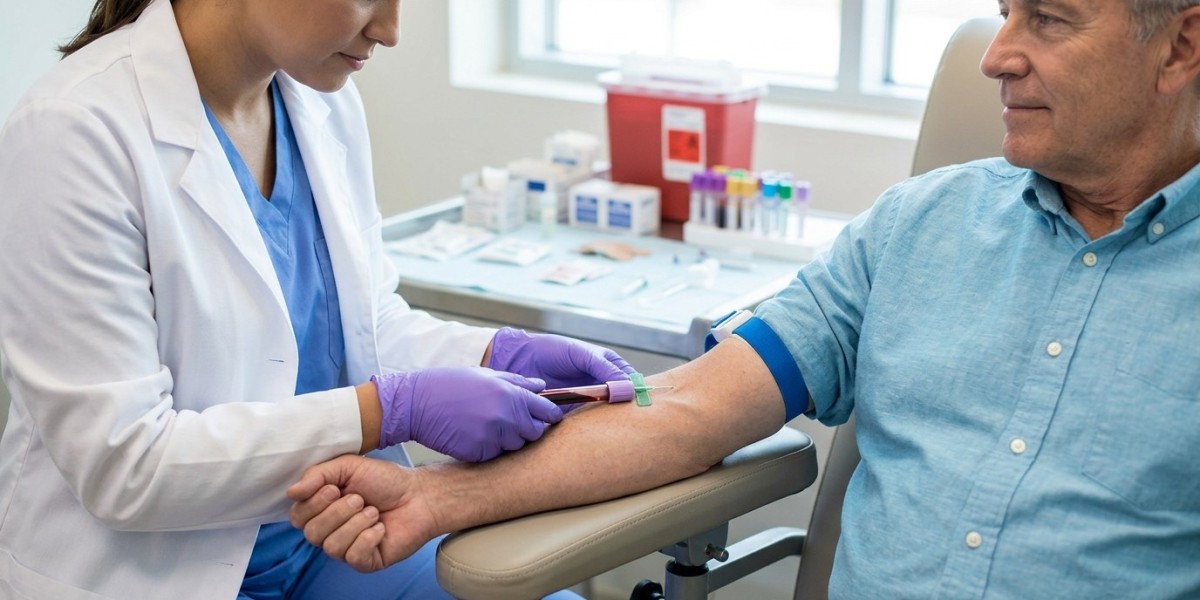
A typical venous blood collection appointment involves several steps.
Patient identification: The professional confirms the patient's details and requested investigations.
Preparation: Collection equipment is arranged using appropriate hygiene practices.
Site selection: A suitable vein is identified.
Blood collection: The required sample is collected using appropriate equipment.
Labelling: Sample containers are labelled correctly.
Transportation: Samples are handled and transported according to the requirements of the requested tests.
These procedures matter because errors in identification, collection or handling can affect the usefulness of a laboratory result.
A Comparison: Prepared Appointment vs Unprepared Appointment
Preparation factor | Well-prepared appointment | Unprepared appointment |
Prescription | Tests confirmed beforehand | Test list may be incomplete |
Fasting | Instructions followed | Incorrect fasting duration |
Medication | Relevant information shared | Medication details overlooked |
Collection space | Clean and comfortable | Frequent interruptions |
Patient details | Verified before collection | Risk of identification errors |
Two Practical Home Collection Examples
Example 1: A working professional
An office employee needs several routine investigations before a scheduled medical consultation. By confirming the prescription and fasting requirements in advance, the patient can arrange a morning collection before beginning the workday.
Example 2: An elderly parent
A family arranging testing for an older parent prepares a comfortable chair, keeps the prescription available and informs the professional about medicines and previous fainting episodes.
Both examples demonstrate how simple planning can improve the collection experience.
Illustrative Case Study: Preventing a Missed Appointment
Consider a hypothetical patient who books a home collection appointment for several investigations but forgets to mention that one test requires fasting.
The collection professional arrives, but the patient has already eaten breakfast. Rather than proceeding without clarification, the patient contacts the healthcare provider to confirm whether the affected investigation should be rescheduled.
The remaining arrangements are reviewed, and a suitable collection plan is established.
Lesson: Sharing the complete prescription and preparation information during booking can prevent avoidable appointment problems.
Planning Your Collection Through EcoTown Diagnostics
Patients exploring a Blood Test at Home in Bangalore can visit EcoTown Diagnostics to learn more about its diagnostic services and home sample collection arrangements.
Before confirming, enquire about the requested tests, service availability at your location, appointment timing and preparation instructions.
Conclusion
Home sample collection works best when patients understand their responsibilities before the appointment. Confirm the prescription, follow test-specific fasting instructions, disclose relevant medicines and prepare a suitable collection space.
A properly organised Blood Test at Home in Bangalore appointment can reduce travel-related inconvenience while keeping attention on the important elements of diagnostic testing: correct identification, appropriate collection and proper sample handling.
Frequently Asked Questions
1. Can I arrange home collection for multiple blood tests?
Yes, several investigations may be accommodated in one appointment, depending on the tests, sample requirements and service availability.
2. Should I drink water before fasting blood collection?
Plain water is generally permitted and may help prevent dehydration. Follow any specific instructions provided by your healthcare professional.
3. Can a person with diabetes undergo fasting blood tests at home?
Yes, when medically appropriate. However, fasting and medication arrangements should be discussed with the treating doctor to avoid unsafe changes in routine.
4. How should I prepare the room for collection?
Choose a clean, well-lit area with a comfortable chair and sufficient space for the collection professional.
5. What if I accidentally eat before a fasting investigation?
Inform your healthcare provider or laboratory. They can determine whether the investigation should proceed or be rescheduled.