
Looking for a Diagnostic Lab? Check These Details Before You Book
Finding a suitable diagnostic centre can become confusing when several facilities advertise advanced equipment, quick reports and quality testing. Patients should compare the actual services offered, accreditation coverage, collection arrangements and reporting procedures before making a decision. If you are searching for a suitable nabl lab in bangalore, a structured evaluation can make the process easier.
A laboratory's accreditation is an important quality indicator, but patients should also understand how their particular test will be performed and where their sample will be processed.
Start With Your Doctor's Investigation List
One common mistake is visiting a diagnostic centre without knowing the exact test requirements.
A doctor may recommend several investigations as part of a single evaluation. Some tests require fasting, specific sample types or particular collection timings. Others may require additional preparation.
Before contacting a laboratory:
Obtain the written investigation list.
Confirm the exact names of the tests.
Ask your doctor whether fasting is necessary.
Check whether medication timing needs special instructions.
Ask whether the tests can be completed during one visit.
A clear test list makes it easier to obtain accurate information from different providers.
What Does NABL Recognition Actually Tell You?
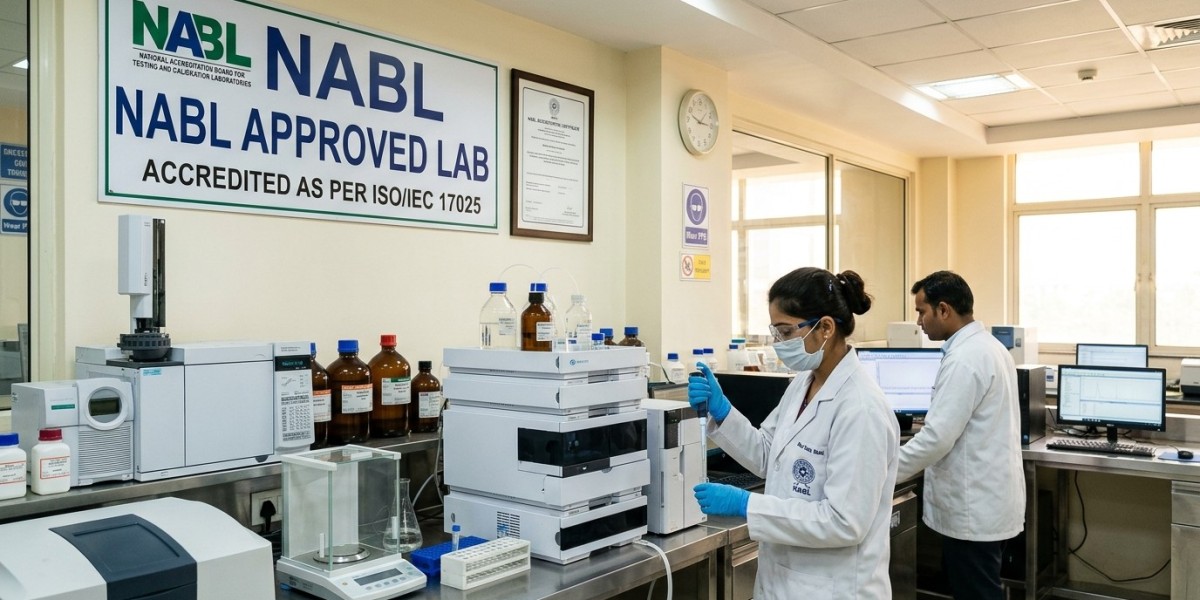
NABL stands for the National Accreditation Board for Testing and Calibration Laboratories. It assesses laboratories against relevant competence and quality requirements.
Medical laboratories are assessed under ISO 15189. Accreditation relates to specific activities rather than automatically approving every service a business advertises.
When assessing a nabl lab in bangalore, patients should pay particular attention to the accreditation scope.
For example, a laboratory may have accreditation covering selected clinical biochemistry and haematology investigations. That does not automatically mean every specialised investigation is included.
The distinction is important because the patient's requirement should match the activities actually covered.
How to Evaluate a Laboratory in One Visit
Use the following checklist when speaking with a diagnostic centre.
Confirm availability: Ask whether the laboratory performs your required investigations.
Check accreditation: Request the latest certificate and its unique identification number.
Match the test: Confirm the investigation appears in the approved scope.
Understand collection: Ask about sample type, fasting requirements and collection timings.
Clarify processing: Find out whether the sample is processed at the same facility or transferred elsewhere.
Ask about reports: Confirm how results are delivered and whom to contact if information is unclear.
Do not hesitate to ask questions. A reliable service interaction should provide understandable information rather than vague assurances.
Centre Collection Versus Home Sample Collection
Patients often choose a diagnostic centre based on their daily schedule. Home collection may be useful for older adults, people with mobility difficulties or individuals who cannot conveniently travel.
However, collection convenience should not replace checks about sample handling.
Consideration | Centre collection | Home collection |
Travel | Patient visits the facility | Technician visits the home |
Scheduling | Depends on centre timings | Requires an arranged collection slot |
Sample identification | Confirmed at collection desk | Confirmed during home visit |
Transport | May be processed on-site | May require controlled transport |
Suitability | Depends on test requirements | Depends on test and collection availability |
Ask whether the home collection service follows appropriate identification, storage and transportation procedures.
Two Situations Where Patients Should Ask More Questions
Example 1: A patient with multiple investigations
Meera needs a routine health assessment involving several blood tests. She contacts two facilities and asks for the exact list of available tests, preparation requirements and report timelines. She selects the option that clearly explains these details instead of choosing solely by package price.
Example 2: A patient requiring repeat testing
Ravi needs a follow-up investigation. He wants the new result compared with an earlier report. He asks whether the same method and reporting units can be used, where possible, to make comparison more meaningful. His doctor can then interpret the results in the appropriate clinical context.
Illustrative Case Study: Making a Practical Choice
Suppose a family is arranging diagnostic testing for an elderly relative who has difficulty travelling.
Initially, they shortlist facilities based on distance. However, they realise that transport itself could be inconvenient.
They contact a nabl lab in bangalore and ask about home collection, technician availability, sample identification, transport arrangements and accreditation coverage.
After obtaining the necessary information, they choose a collection arrangement that fits the patient's circumstances and the test requirements.
The key lesson is that service convenience and laboratory quality checks should be considered together.
Where EcoTown Diagnostics Fits Into Your Search
Patients can explore EcoTown Diagnostics for information about laboratory investigations, diagnostic imaging, health packages and home sample collection in Bengaluru.
Before making an appointment, contact the facility to confirm the availability of your specific test and obtain its current accreditation documentation. Do not assume that every listed service is covered by the same accreditation scope.
Mistakes That Can Make Laboratory Selection Difficult
Avoid these common errors:
Choosing only by the lowest advertised package price.
Assuming a certificate covers every investigation.
Ignoring the facility address mentioned on accreditation documents.
Forgetting to confirm fasting or preparation instructions.
Comparing reports without considering methods and reference intervals.
Assuming a home collection service is available for every test.
These details are particularly important when investigations are being performed for ongoing medical evaluation.
Conclusion
A diagnostic laboratory should be evaluated according to the patient's actual testing requirements, not just its advertising claims. Check accreditation validity, test coverage, sample collection, processing arrangements and report communication before booking.
When comparing a nabl lab in bangalore, take time to ask specific questions and obtain clear answers. This approach supports a more informed decision and helps avoid misunderstandings during the testing process.
Frequently Asked Questions
1. What is the difference between a medical laboratory and an imaging centre?
A medical laboratory analyses samples such as blood and urine, while an imaging centre performs examinations such as ultrasound, CT and MRI.
2. Can I request an accreditation certificate before booking?
Yes. You can ask the facility for its current certificate and the relevant scope of accreditation.
3. Is home sample collection suitable for everyone?
It depends on the investigation, collection requirements and availability of the service. Confirm suitability with the laboratory.
4. Why do some tests require fasting?
Fasting may be required for certain investigations because recent food intake can affect the interpretation of specific results. Follow the instructions given by your doctor or laboratory.
5. Can I use reports from different laboratories for comparison?
They may provide useful information, but differences in methods, units and reference intervals should be considered by the treating doctor.