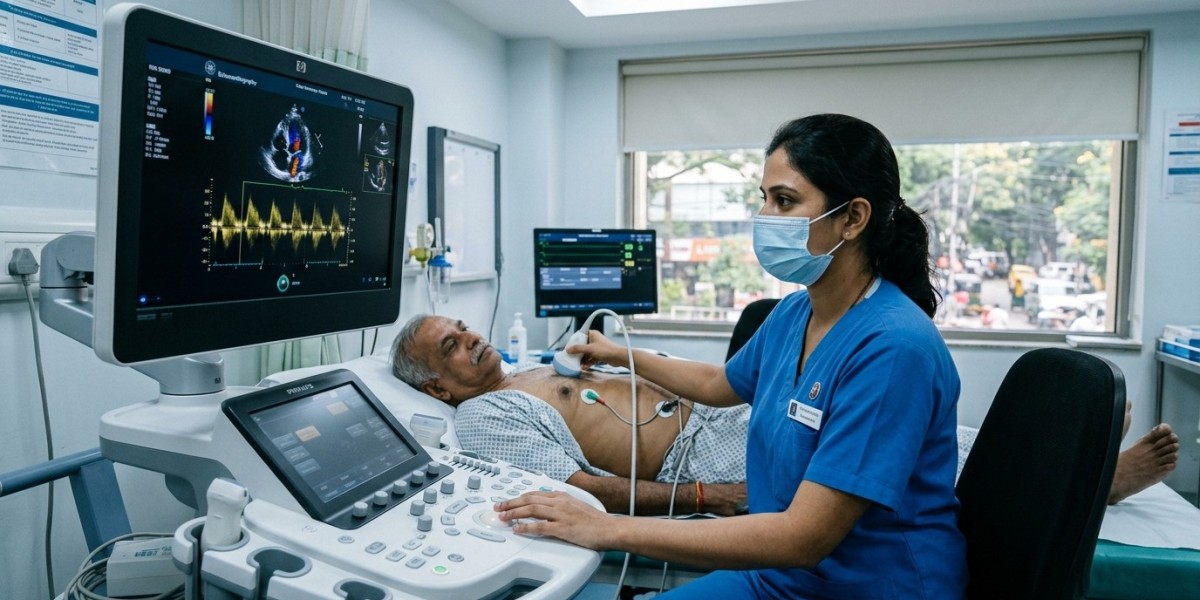

When a doctor recommends an echocardiogram, choosing a suitable diagnostic facility is an important part of arranging the examination. Patients comparing reliable echocardiography testing services in Bangalore for detailed heart evaluation should consider more than distance or appointment availability. Understanding the examination, equipment, reporting process and medical guidance can make the experience more organised.
An echocardiogram uses ultrasound waves to create moving images of the heart. It helps doctors examine heart chambers, valves, pumping function and blood flow. However, the usefulness of the examination depends on selecting the appropriate test and ensuring that the resulting images and report address the clinical question.
Why choosing the right facility matters
Patients sometimes select a diagnostic centre solely because it is close to their home. Convenience matters, particularly for older adults and people who need repeated monitoring, but it should not be the only consideration.
Before booking, check whether the facility performs the specific examination prescribed by the cardiologist. A standard transthoracic echocardiogram may be sufficient for one patient, while another may require a specialised examination.
A suitable facility should also explain appointment requirements, expected preparation, report availability and the process for obtaining clarification.
What should patients evaluate before booking?
Consider these practical factors when comparing local diagnostic facilities.
1. Availability of the prescribed examination
Confirm whether the centre offers the exact examination mentioned on the prescription. Standard 2D echocardiography, transesophageal echocardiography and stress echocardiography are different procedures.
Do not assume that every facility offering cardiac imaging performs every specialised examination.
2. Equipment and image quality
Ultrasound equipment produces images that help clinicians evaluate cardiac structures and movement. Ask whether the centre has equipment suitable for the examination requested.
Good imaging also depends on appropriate scanning technique, patient positioning and the ability to obtain useful views.
3. Reporting arrangements
Ask who interprets the images and how the findings will be documented. The report should provide relevant observations rather than simply stating that the examination is completed.
4. Patient communication
Staff should explain the basic procedure, appointment requirements and any preparation instructions. Patients should have an opportunity to mention mobility concerns, previous cardiac procedures or difficulties lying in a particular position.
Understanding the available examination types
Examination | What it evaluates | Important consideration |
2D echocardiography | Heart chambers, valves and movement | Commonly used for structural assessment |
Doppler echocardiography | Direction and speed of blood flow | Helps evaluate valve-related blood-flow abnormalities |
Transesophageal echocardiography | Detailed cardiac images using an oesophageal probe | Requires additional preparation and medical supervision |
Stress echocardiography | Heart function under stress | Requires assessment and specific preparation |
The treating doctor decides which examination is appropriate. Patients should not independently replace a prescribed procedure with another option.
A practical appointment-planning process
Follow these steps before visiting a diagnostic facility:
Review the prescription: Identify the exact examination requested and any specific clinical instructions.
Check service availability: Contact the facility and confirm that it performs the prescribed procedure.
Ask about preparation: A standard transthoracic examination generally requires no special preparation, but other types may involve restrictions.
Organise previous records: Carry earlier reports, ECG results, relevant prescriptions and cardiac procedure documents.
Confirm reporting arrangements: Ask when the report will be available and how it can be collected.
Discuss concerns: Inform the team about breathing difficulties, limited mobility or discomfort while lying down.
This simple process reduces avoidable confusion and helps patients arrive prepared.
Two situations where advance planning helps
Example 1: A patient with previous cardiac reports
Someone undergoing a repeat examination may have reports from several months earlier. Carrying these documents helps the treating cardiologist compare the findings and assess whether there have been meaningful changes.
Example 2: An older adult with mobility difficulties
A patient who struggles to lie flat may need additional assistance during the appointment. Informing the facility beforehand allows staff to explain the available arrangements and determine whether the examination can be performed comfortably.
Illustrative Case Study: Avoiding an unnecessary repeat appointment
A hypothetical patient receives a prescription for a cardiac ultrasound examination but books a standard appointment without checking the exact procedure.
On arrival, the patient discovers that the requested specialised examination is not available during that appointment.
The patient must reschedule, arrange transportation again and potentially delay the planned evaluation.
The better approach would have been to share the prescription while booking, confirm the procedure type and ask about preparation requirements.
Lesson: Confirming the examination before travelling can prevent avoidable scheduling problems.
Exploring local diagnostic services
Patients researching diagnostic options can explore Ecotown Diagnostics to understand its available services. Its website lists echocardiography among its cardiac diagnostic offerings, along with ECG and treadmill testing.
When comparing providers, independently confirm the exact procedure, appointment availability and reporting arrangements before visiting.
Common mistakes to avoid
Booking based only on the advertised price.
Ignoring the exact examination written on the prescription.
Assuming every ultrasound facility offers specialised cardiac procedures.
Forgetting previous reports during a follow-up examination.
Stopping prescribed medication without medical instructions.
Assuming an imaging report replaces a cardiologist's consultation.
Conclusion
Selecting a diagnostic facility requires attention to the prescribed procedure, equipment, reporting arrangements and patient support. Comparing these factors can make cardiac imaging appointments more convenient and clinically appropriate.
When researching echocardiography testing services in Bangalore, prioritise a facility that can clearly explain its examination options and booking requirements. Always discuss the report and next steps with the treating doctor rather than interpreting individual measurements independently.
Frequently Asked Questions
1. Is an echocardiogram the same as an ECG?
No. An ECG records the electrical activity of the heart, while an echocardiogram uses ultrasound to create images of cardiac structures and movement.
2. Does every patient need a 2D echocardiogram?
No. The appropriate examination depends on symptoms, medical history and the doctor's clinical assessment.
3. Can previous cardiac reports help during a repeat examination?
Yes. Earlier reports may help the treating doctor compare cardiac measurements and identify changes over time.
4. Is an echocardiogram painful?
A standard examination performed through the chest is generally painless. Patients may experience mild pressure from the ultrasound probe.
5. Should medication be stopped before the examination?
Do not stop prescribed medication unless the treating doctor specifically instructs you to do so.










