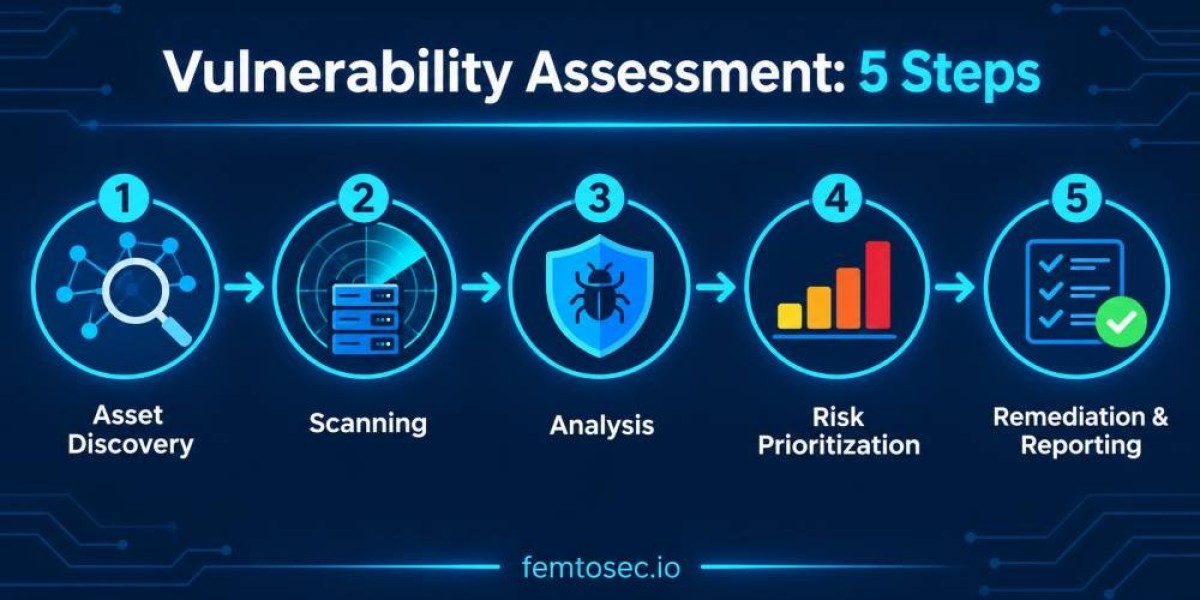

Cyber threats continue to evolve, making it essential for businesses to identify security weaknesses before attackers exploit them. From outdated software and misconfigured networks to weak passwords and exposed applications, even small vulnerabilities can create serious security risks.
A professional vulnerability assessment helps organizations discover these weaknesses, understand their potential impact, and prioritize remediation. It provides businesses with a clearer view of their security posture and helps security teams make informed decisions about risk reduction.
For organizations looking to strengthen their cybersecurity defenses, FemtoSec provides vulnerability assessment services designed to identify, prioritize, and track security weaknesses across IT infrastructure.
What Is a Vulnerability Assessment?
A vulnerability assessment is a systematic process of identifying, analyzing, and prioritizing security weaknesses in an organization's IT environment. It examines networks, applications, servers, endpoints, cloud environments, and other digital assets to uncover potential entry points for cyberattacks.
A comprehensive assessment helps organizations understand which vulnerabilities require immediate attention and which can be addressed through planned security improvements.
The objective is not simply to identify weaknesses but to provide actionable insights that help reduce cybersecurity risks.
Why Is Security and Vulnerability Assessment Important?
A strong cybersecurity strategy requires continuous visibility into potential security gaps. A security and vulnerability assessment helps organizations identify weaknesses that could otherwise remain unnoticed.
Key benefits include:
Early Risk Identification: Discover vulnerabilities before attackers exploit them.
Improved Security Posture: Identify weaknesses across networks, applications, and systems.
Better Risk Prioritization: Focus remediation efforts on critical security issues.
Regulatory Readiness: Support security governance and compliance requirements.
Reduced Attack Surface: Address exposed services, outdated software, and insecure configurations.
Regular assessments help businesses move from reactive security practices toward proactive risk management.
Common Security Vulnerabilities Businesses Should Identify
A professional security vulnerability assessment can help uncover several types of weaknesses, including:
1. Outdated Software and Unpatched Systems
Software that is not regularly updated may contain known vulnerabilities that attackers can exploit.
2. Network Misconfigurations
Incorrect firewall rules, exposed ports, and insecure network settings can create opportunities for unauthorized access.
3. Weak Authentication
Weak passwords, poor access controls, and missing multi-factor authentication can increase the risk of account compromise.
4. Application Vulnerabilities
Web applications and APIs may contain security flaws such as injection vulnerabilities, insecure authentication, and improper access controls.
5. Cloud Security Misconfigurations
Publicly exposed storage, excessive permissions, and insecure cloud configurations can expose sensitive business information.
Identifying these issues early allows organizations to take corrective action before they lead to security incidents.
What Does a Vulnerability Assessment Report Include?
A professional vulnerability assessment report provides a structured overview of identified security weaknesses and recommended remediation actions.
A useful report generally includes:
Executive summary of the assessment
Scope and methodology
Identified vulnerabilities and affected assets
Severity ratings and risk prioritization
Technical findings and supporting evidence
Recommended remediation steps
Risk mitigation guidance
This information helps technical teams understand what needs to be fixed while giving management a clear view of the organization's cybersecurity risks.
How Vulnerability Risk Assessment Helps Prioritize Threats
Not every vulnerability presents the same level of risk. Some weaknesses may have limited impact, while others could expose sensitive information or disrupt critical business operations.
A vulnerability risk assessment evaluates vulnerabilities based on factors such as:
Severity of the vulnerability
Potential impact on business operations
Exploitability and exposure
Sensitivity of affected systems or data
Existing security controls
Commonly, the Common Vulnerability Scoring System (CVSS) is used to help classify vulnerabilities by severity.
Prioritizing findings allows organizations to address critical and high-risk issues first rather than treating every vulnerability equally.
Cyber Security Vulnerability Assessment: What Is Included?
A cyber security vulnerability assessment can cover multiple areas of an organization's digital environment.
Depending on the assessment scope, it may include:
Network vulnerability scanning
Web application security checks
Server and endpoint assessments
Cloud infrastructure reviews
Configuration and patch management checks
Identification of exposed services
Security risk analysis and remediation recommendations
This broad approach helps organizations gain better visibility into their overall security posture.
IT Vulnerability Assessment for Business Infrastructure
An IT vulnerability assessment focuses on identifying weaknesses across an organization's technology infrastructure.
This may include servers, workstations, operating systems, databases, network devices, and cloud-based resources.
Regular assessments help IT teams identify outdated systems, insecure configurations, missing patches, and unnecessary exposure. They also provide useful information for improving infrastructure security and maintaining business continuity.
Nessus Vulnerability Assessment: Understanding the Role of Scanning Tools
A Nessus vulnerability assessment refers to using Nessus as a vulnerability scanning tool to identify known security weaknesses across systems and networks.
Nessus can help security teams discover issues such as missing patches, outdated software, and configuration weaknesses. However, automated scan results should be reviewed and validated before remediation decisions are made.
Scanning tools support the assessment process, but expert analysis remains important for understanding business impact, confirming findings, and prioritizing corrective actions.
Threat and Vulnerability Assessment: Understanding the Difference
A threat and vulnerability assessment considers both potential threats and the weaknesses they may exploit.
A vulnerability represents a weakness in a system, while a threat is a potential event or actor that could take advantage of that weakness.
For example, an outdated server may contain a known security vulnerability. A threat actor could exploit that weakness to gain unauthorized access.
Evaluating threats alongside vulnerabilities helps organizations understand their exposure and make better security decisions.
What Does a Vulnerability Assessment Analyst Do?
A vulnerability assessment analyst helps identify, validate, analyze, and report security weaknesses across an organization's IT environment.
Typical responsibilities include:
Conducting vulnerability scans
Reviewing scan results and validating findings
Analyzing vulnerability severity
Identifying affected systems and assets
Preparing technical assessment reports
Recommending remediation actions
Tracking vulnerability resolution
The analyst's role is important because automated tools can identify potential weaknesses, but human expertise helps determine their actual relevance and business impact.
Vulnerability Assessment Software and Tools
Organizations use different types of vulnerability assessment software to discover and manage security weaknesses.
These solutions can support automated scanning, asset discovery, vulnerability classification, reporting, and remediation tracking.
Commonly used vulnerability assessment tools include:
Nessus
OpenVAS
Qualys
Rapid7 InsightVM
Microsoft Defender Vulnerability Management
The right tool depends on infrastructure size, assessment requirements, security objectives, and available resources. Organizations should also ensure that scan results are reviewed by qualified security professionals.
How Often Should Businesses Conduct Vulnerability Assessments?
Vulnerability assessments should be performed regularly rather than treated as a one-time security activity.
Organizations should consider conducting assessments:
At least quarterly
After major infrastructure changes
When deploying new applications or systems
Following significant security incidents
When new vulnerabilities affect business-critical technology
Continuous visibility and regular assessments help organizations identify newly emerging weaknesses and maintain stronger security practices.
Why Choose FemtoSec for Vulnerability Assessment Services?
Identifying vulnerabilities is only the first step. Businesses also need clear risk prioritization, actionable recommendations, and effective remediation tracking.
FemtoSec helps organizations identify, prioritize, and monitor security weaknesses across their infrastructure. Its vulnerability assessment approach supports intelligent discovery, severity-based filtering, real-time alerts, CVSS scoring, trend analysis, and remediation tracking.
With expert assessment and structured reporting, organizations can gain better visibility into security gaps and focus on the issues that matter most.
Explore FemtoSec Vulnerability Assessment Services to strengthen your organization's security posture and reduce potential exposure.
Conclusion
Cybersecurity risks can emerge from even small weaknesses in business infrastructure. Regular vulnerability assessments help organizations discover these issues, understand their potential impact, and take appropriate action.
By combining reliable scanning tools, expert analysis, risk prioritization, and remediation tracking, businesses can build a more proactive approach to cybersecurity.
Protect your digital infrastructure with FemtoSec. Explore our vulnerability assessment services and take the next step toward stronger security.
Frequently Asked Questions (FAQs)
1. What is the main purpose of a vulnerability assessment?
Its main purpose is to identify, evaluate, and prioritize security weaknesses before attackers can exploit them.
2. What is included in a vulnerability assessment?
It may include network scanning, application checks, infrastructure reviews, vulnerability identification, severity classification, and remediation recommendations.
3. How is vulnerability assessment different from penetration testing?
A vulnerability assessment identifies and prioritizes security weaknesses. Penetration testing attempts to exploit selected weaknesses to evaluate their real-world impact.
4. Which vulnerability assessment tools are commonly used?
Common tools include Nessus, OpenVAS, Qualys, Rapid7 InsightVM, and Microsoft Defender Vulnerability Management.
5. How often should a vulnerability assessment be performed?
Organizations should generally conduct assessments at least quarterly and after significant infrastructure changes or security incidents.
6. Why is vulnerability assessment important for businesses?
It helps businesses identify security gaps, reduce exposure, prioritize remediation, and improve their overall cybersecurity posture







