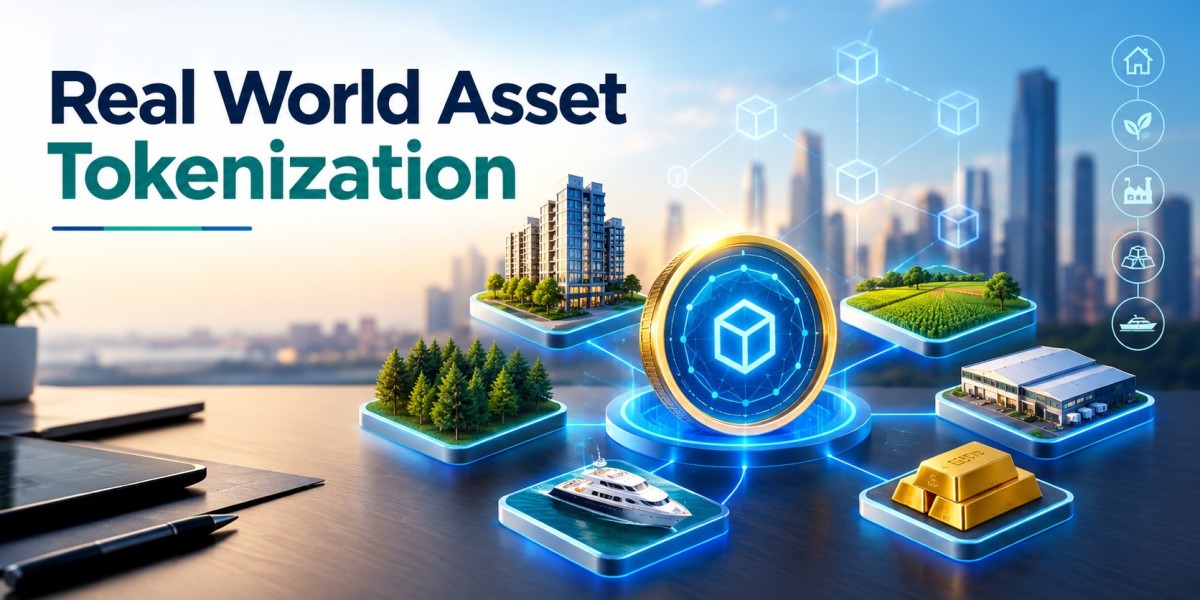

Businesses often own valuable physical assets such as commercial buildings, factories, solar power plants, warehouses, and transportation infrastructure. These assets can generate regular income through rent, service fees, energy sales, or operating revenue. However, raising additional capital from these assets may require businesses to sell part of their ownership or take on more debt.
Real World Asset (RWA) tokenization offers another approach. Businesses can tokenize revenue rights, allowing eligible investors to receive a defined share of income generated by an asset without transferring ownership of the physical asset itself. This approach allows businesses to retain control over their properties or infrastructure while exploring new ways to raise funds.
What Is Revenue Rights Tokenization?
Revenue rights tokenization is the process of representing a contractual right to receive income through digital tokens on a blockchain. In simple terms, a business owns an asset that generates money. Instead of selling the asset, the business creates an agreement that allows investors to receive a specified portion of its future revenue. Digital tokens represent the rights defined in that agreement. For example, a company owns a commercial building and earns monthly rental income. Rather than selling the building to raise funds, the company can tokenize a portion of the rental income. Investors purchase the tokens and receive payments according to the agreed terms, while the company retains ownership of the building. The important distinction is that investors receive revenue rights, not automatic ownership of the underlying physical asset. Their rights depend on the legal agreement, the token structure, and applicable regulations.
How Can Businesses Tokenize Revenue Rights Without Selling Assets?
Businesses can follow a structured process to convert eligible revenue rights into digital tokens.
1. Identify an Income-Generating Asset
The first step is to identify an asset or business operation that produces predictable revenue. Examples include rental properties, renewable energy installations, logistics facilities, manufacturing equipment, and commercial infrastructure.
Businesses should evaluate the asset's revenue history, operating expenses, existing financial obligations, and future income potential. Reliable revenue records help determine whether the proposed investment structure is practical.
2. Define the Revenue Rights
Businesses must clearly establish which income investors will be entitled to receive.
The agreement may cover a percentage of rental income, a portion of electricity sales, warehouse service fees, or another defined revenue stream. It should specify the payment calculation, distribution schedule, duration of the rights, and conditions that could affect payments.
For instance, a warehouse operator might offer investors 15% of eligible rental revenue for five years. This does not necessarily give investors any ownership of the warehouse. It gives them the contractual rights described in the agreement.
3. Establish a Legal Structure
Before issuing tokens, the business must establish a legally enforceable arrangement for the revenue rights. Depending on the transaction, this could involve a contractual revenue-sharing arrangement, a special-purpose vehicle (SPV), or another suitable legal structure.
The documentation should explain how revenue is collected, how investor payments are calculated, and what happens if the asset generates less income than expected.
Businesses must also assess securities laws, investor eligibility, tax obligations, property restrictions, and other applicable requirements. Tokenization does not automatically remove these legal responsibilities.
4. Convert Revenue Rights Into Digital Tokens
Once the legal structure is established, the business can work with a blockchain development provider to create tokens representing the defined rights.
Each token may correspond to a specified unit of the investment or a proportional entitlement to eligible revenue. Smart contracts can help manage token issuance, permitted transfers, investor records, and distribution calculations.
However, the tokens themselves do not automatically establish legal ownership or guarantee payments. Their enforceability depends on the underlying documentation and the way the token system is designed.
5. Distribute Tokens to Eligible Investors
The business can offer tokens to eligible investors through a compliant investment platform. Depending on the structure, investors may receive contractual revenue entitlements in exchange for their investment.
Investor onboarding may include identity verification, anti-money laundering checks, eligibility assessments, and other compliance procedures.
The funds raised can support business expansion, operational improvements, debt management, or new projects without requiring the company to sell the underlying physical asset.
6. Track Revenue and Distribute Payments
After the token offering, the business must track the revenue generated by the underlying asset and calculate investor distributions according to the agreed terms.
Smart contracts can automate parts of the distribution process when reliable payment data and appropriate integrations are available. Businesses still need accurate accounting, oversight, dispute-handling procedures, and a clear process for reporting financial performance.
Industries That Can Benefit From Revenue Rights Tokenization
Revenue rights tokenization can apply to several industries where assets or operations generate identifiable income.
Real Estate
Property owners can tokenize eligible rental income from residential buildings, office spaces, shopping centers, and warehouses. Investors may receive a share of rental revenue while the owner retains the property title and management responsibilities.
Renewable Energy
Solar and wind energy companies can explore tokenizing contractual rights to a portion of eligible electricity sales or project revenue. This can create an alternative funding structure for energy infrastructure, subject to project contracts and regulatory requirements.
Logistics and Warehousing
Businesses operating warehouses, distribution centers, and logistics facilities can structure tokens around eligible storage fees, leasing revenue, or service income. This may help them raise capital for expanding operations while retaining ownership of their facilities.
Manufacturing
Manufacturers can consider revenue-linked token structures based on defined income from production contracts or equipment-related services. These arrangements require careful consideration of operating costs, customer agreements, and revenue fluctuations.
Hospitality
Hotel operators and hospitality businesses may explore tokenizing a portion of eligible room revenue or other defined income streams. The structure must account for seasonal demand, operating expenses, management agreements, and investor payment conditions.
Key Benefits of Tokenizing Revenue Rights
Retain Physical Asset Ownership
The business can continue owning and operating the underlying asset while raising funds through contractual revenue rights. This may be useful for companies that want to preserve long-term control over valuable properties or infrastructure.
Access Alternative Funding Sources
Tokenization can help businesses explore funding beyond traditional loans and conventional equity investments. The suitability of this approach depends on the asset, investor demand, transaction costs, and legal structure.
Create Fractional Investment Opportunities
Revenue rights can potentially be divided into smaller investment units, allowing eligible investors to participate without purchasing an entire property or infrastructure project.
Improve Recordkeeping
Blockchain records can provide a traceable history of token issuance and permitted transfers. When integrated with reliable financial systems, they can also support the reporting and administration of revenue distributions.
Support Flexible Funding Structures
Businesses can design revenue-sharing arrangements around defined payment periods, revenue percentages, or project milestones. These terms must be commercially viable and legally enforceable.
Revenue Rights Tokenization vs. Physical Asset Tokenization
Although both approaches use blockchain technology, they represent different interests.
| Feature | Revenue Rights Tokenization | Physical Asset Ownership Tokenization |
|---|---|---|
| What the token represents | A defined right to receive revenue | An ownership interest or legally structured claim linked to an asset |
| Physical asset ownership | Can remain with the original owner | May involve transferring or sharing ownership, depending on the structure |
| Investor returns | Depend on the agreed revenue arrangement | May include income, appreciation, or other ownership-related benefits |
| Investor control | Usually limited to contractual rights | Depends on the ownership structure and associated rights |
| Main consideration | Revenue calculation and payment enforcement | Asset ownership, legal title, and transfer requirements |
The distinction is important because tokenizing income from a property does not automatically tokenize the property itself. Businesses should select the structure that matches their funding goals and the rights they intend to offer.
Challenges Businesses Should Consider
Despite its potential, revenue rights tokenization requires careful planning.
Revenue uncertainty: Income may fluctuate because of vacancies, changing demand, operating costs, equipment failures, or market conditions. Businesses should explain these risks clearly to investors.
Legal enforceability: The rights represented by tokens must be supported by appropriate legal documentation. A blockchain record alone may not establish a valid claim to revenue.
Regulatory compliance: Depending on the jurisdiction and offering structure, revenue-sharing tokens may be classified as securities or other regulated financial products.
Accurate revenue reporting: Investors need reliable information about the income used to calculate their payments. Businesses must establish transparent reporting and auditing procedures.
Technology integration: Token platforms may need to connect with accounting systems, payment providers, investor verification services, and reliable sources of asset revenue data.
Liquidity limitations: Tokenization does not guarantee that investors can resell their tokens. Secondary transfers may be restricted by regulations, platform rules, and contractual conditions.
How Can Businesses Build a Revenue Rights Tokenization Platform?
Businesses planning to launch a tokenization platform should begin by defining the investment model and the rights investors will receive. The platform must then support the legal, financial, and technical requirements of that model.
Key platform components may include:
Asset and revenue management: Records of eligible assets, revenue sources, and financial performance.
Smart contract development: Token issuance, ownership records, transfer restrictions, and distribution logic.
Investor onboarding: Identity verification, eligibility checks, and compliance workflows.
Payment management: Revenue calculations, distribution schedules, transaction records, and payment reconciliation.
Reporting dashboards: Information about revenue performance, investor entitlements, and payment history.
Security controls: Access management, smart contract testing, transaction monitoring, and protection of sensitive data.
Businesses can work with a specialized tokenization development company such as Inoru to explore the technical architecture for a revenue rights tokenization platform. The implementation should be based on the business model, jurisdiction, asset category, and applicable compliance requirements rather than technology alone.
Conclusion
Revenue rights tokenization gives businesses another way to explore capital raising without necessarily selling their physical assets. By converting defined contractual income rights into digital tokens, companies can potentially attract eligible investors while retaining ownership and operational control of properties, infrastructure, and other income-generating assets.
The success of this model depends on more than blockchain technology. Businesses need a clear revenue-sharing agreement, enforceable legal rights, reliable financial reporting, suitable investor protections, and a compliant tokenization platform.
As real-world asset tokenization develops, revenue-based structures may offer businesses additional ways to connect the income generated by existing assets with new funding opportunities. The key is to ensure that every token represents a clearly defined and legally supported right.